Question 36 UFIV01 - Chief Engineer - UFIV
The main engines on your fishery research vessel utilize a starting system similar to that shown in the illustration. The air supply pressure and engine room ambient temperatures are both within the normal range. Upon attempted start-up, the engine turns very slowly, and the flow rate of air from the air starting motor exhaust is very low. Which of the listed conditions would most likely be the cause of the failure to start? Illustration MO-0203
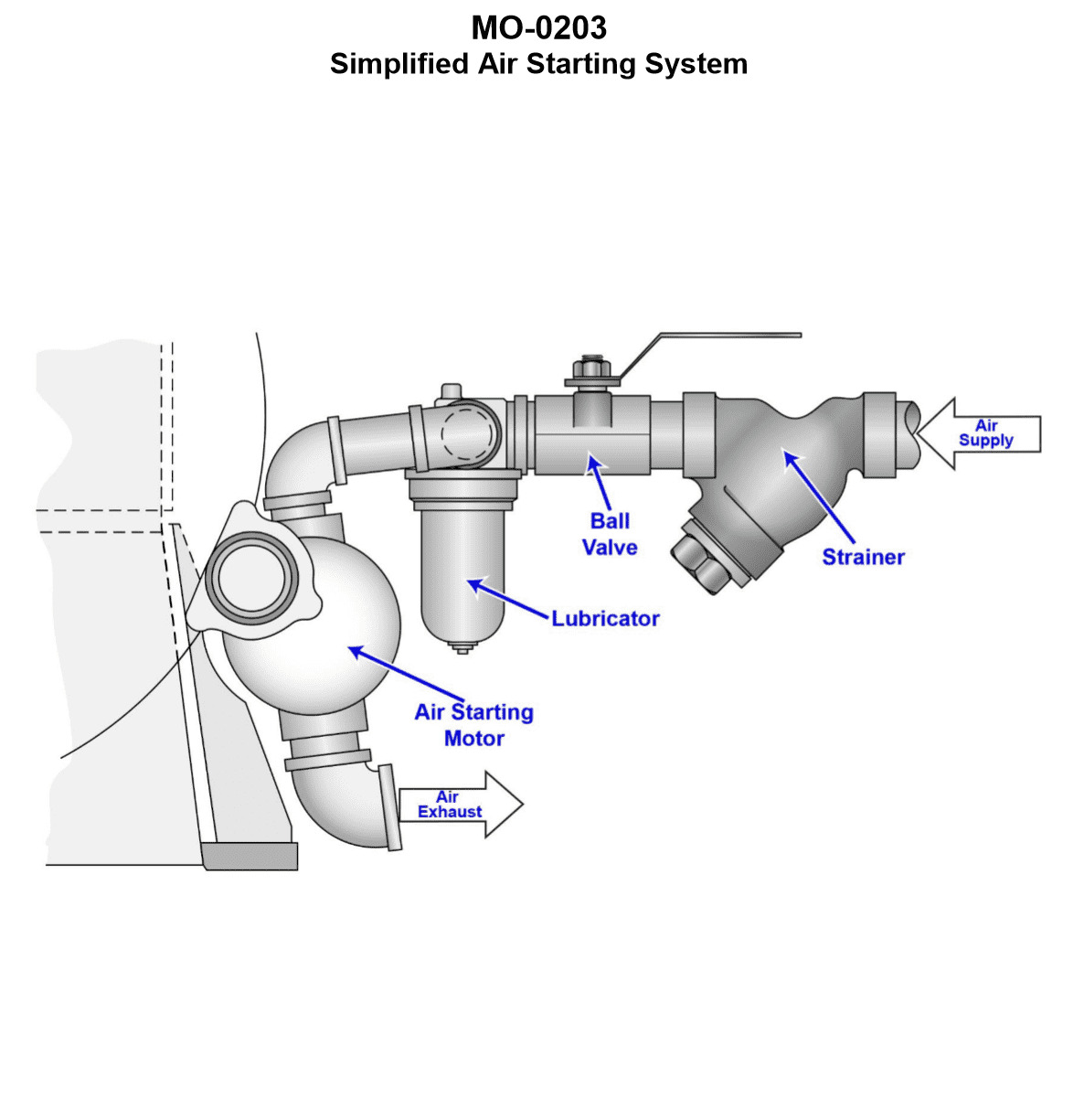
The Correct Answer is A **Why option A is correct:** The symptoms described—the engine turning very slowly and the extremely low flow rate of air from the air starting motor exhaust—indicate a severe lack of airflow *into* the starting motor. The air supply pressure is noted as normal, meaning the restriction must occur between the main air supply and the starting motor itself. An in-line strainer (filter) is designed to remove contaminants from the air before it reaches the motor. If the strainer basket element becomes severely restricted or clogged, it drastically reduces the volume of high-pressure air reaching the motor. This reduction in air volume directly leads to insufficient torque (slow turning) and minimal exhaust flow, perfectly matching the observed failure symptoms. **Why option B is incorrect:** If the air-starting motor vanes were stuck in their slots, the motor would likely bind up entirely, potentially turning very briefly or not at all, rather than turning "very slowly." More importantly, even if the vanes were stuck, the air pressure would still be applied to the motor housing, and the flow of air (volume) would likely remain high or even increase (as the air attempts to bypass the blocked vanes or rotor), which contradicts the symptom of a very low exhaust air flow rate. The primary failure is a lack of *input flow*, not an internal motor mechanical fault. **Why option C is incorrect:** The in-line lubricator’s function is to inject oil mist into the starting air for lubrication. A restricted siphon tube would inhibit or stop oil delivery, leading to premature wear and eventually slow operation or failure due to friction. However, a restriction in the siphon tube (which handles the oil) does not restrict the main air path volume through the starter system itself. Therefore, it would not cause the immediate and drastic reduction in air flow rate observed at the exhaust. **Why option D is incorrect:** The fuel injection system being air-bound prevents fuel from being injected into the cylinders. This condition would cause the engine to crank normally (since the air starter is working), but the engine would fail to fire or start running under its own power. It would not, however, affect the mechanical operation of the air starter itself, which means the engine turning speed and the air starter exhaust flow rate would both remain normal (assuming sufficient air pressure).
Pass Your Coast Guard Licensing Exams!
Study offline, track your progress, and simulate real exams with the Coast Guard Exams app