Question 52 OSE02 - Assistant Engineer - OSV
The anchor handling vessel to which you are assigned has a pneumatic propulsion control system as shown in the illustration. Which control valve is responsible for by-passing the inflation delay orifice to insure rapid and positive reversals and to protect the clutches from excessive slip? Illustration MO-0167
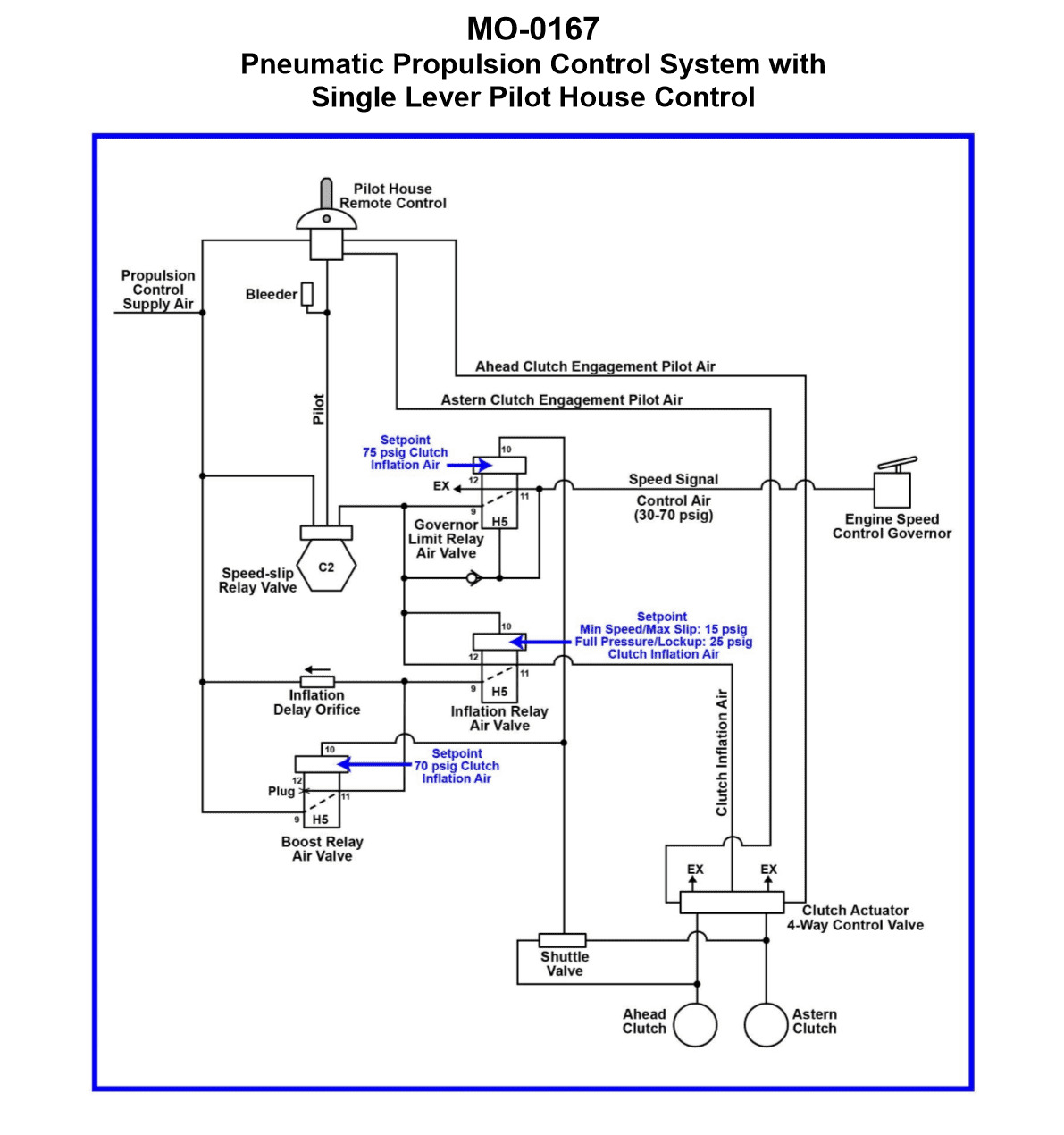
The Correct Answer is A The control valve responsible for by-passing the inflation delay orifice to ensure rapid and positive reversals, and to protect the clutches from excessive slip, is the **H5 boost relay air valve** (Option A). In pneumatic propulsion control systems utilizing clutches (often referred to as reverse-reduction gears or CPP systems with clutches), a controlled inflation rate is necessary for smooth engagement. However, during rapid maneuvers or crash reversals, immediate clutch engagement is needed. The boost relay air valve senses a demand for rapid reversal (often triggered by high pressure from the maneuvering air valve) and momentarily bypasses the main inflation delay orifice, rapidly pressurizing the clutch to achieve positive engagement and minimize slippage, thereby protecting the clutch plates. **Why the other options are incorrect:** * **B) C2 speed-slip relay valve:** This type of valve (if present) generally monitors and controls the difference in speed between the input and output shafts (slip) during engagement or maneuvering. It may adjust the inflation rate but is not the primary component responsible for the high-pressure bypass function during rapid reversal demand. * **C) H5 inflation air relay valve:** This valve typically controls the *normal* inflation sequence and rate of the clutch, often in conjunction with the delay orifice to ensure smooth, slow engagement during routine operation. It is the valve that the boost function *bypasses*, not the bypass mechanism itself. * **D) H5 governor limit relay air valve:** This valve usually interacts with the engine governor to limit engine speed or load until the clutch is fully engaged or to prevent engine overload. Its function relates to engine protection and synchronization, not the rapid inflation bypass of the clutch itself.
Pass Your Coast Guard Licensing Exams!
Study offline, track your progress, and simulate real exams with the Coast Guard Exams app