Question 12 OSE02 - Assistant Engineer - OSV
The offshore oil spill response vessel to which you are assigned is fitted with auxiliary engines as partly shown in the illustration. What statement is true concerning the valve guide and valve seat arrangements? Illustration MO-0163
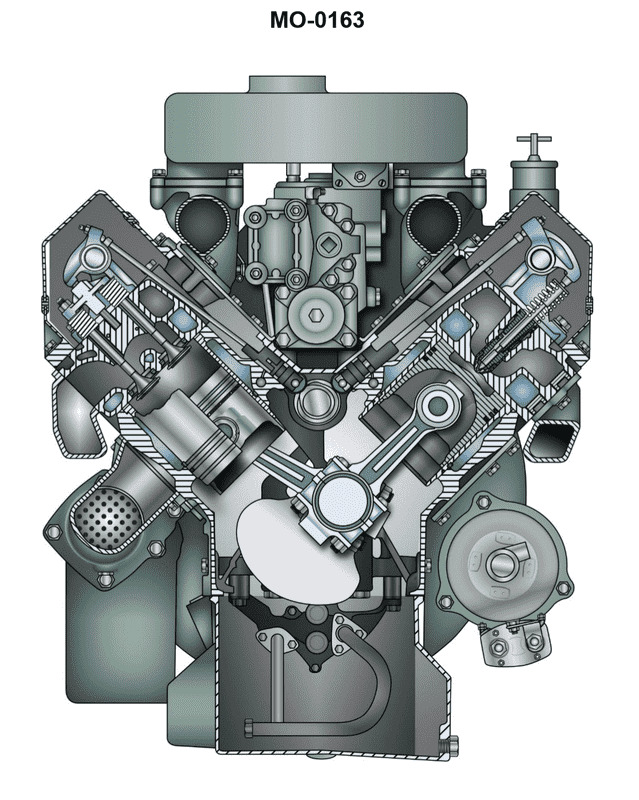
The Correct Answer is B. ### Explanation for Correctness of Option B Option B states that **the valve guides and the valve seats are both replaceable inserts**. This is the standard and necessary design practice for high-output, long-life, medium-speed diesel engines (such as those typically used in offshore oil spill response vessels) for the following reasons: 1. **Valve Seat Inserts:** Valve seats (where the valve head rests) suffer intense thermal stress, high mechanical impact loads, and wear due to friction and corrosion. To ensure longevity and cost-effective maintenance, the cylinder head is protected by using hard, wear-resistant alloy rings (inserts) pressed or shrunk into the cylinder head casting. When these seats wear out or become damaged, they are easily removed and replaced with new ones, avoiding the costly replacement of the entire cylinder head. 2. **Valve Guide Inserts:** The valve guides (which guide the valve stem's movement) also wear down due to friction and high temperatures. Like the valve seats, these guides are almost universally made as replaceable inserts (usually bushings) pressed into the cylinder head. If the guide was integral (part of the cylinder head casting), excessive wear would necessitate machining the cylinder head to an oversized specification (if possible) or scrapping the entire head, which is economically impractical for large marine engines. Therefore, for routine maintenance and overhaul procedures on marine auxiliary engines, both the valve seats and the valve guides must be easily replaceable components. ### Explanation for Incorrect Options **A) The valve guides are replaceable inserts, and the valve seats are integral (non-replaceable):** This is incorrect. While the guides are typically replaceable, making the high-wear valve seats integral would expose the expensive cylinder head casting to direct wear and thermal damage, making repairs extremely costly or impossible. **C) The valve guides and the valve seats are both integral (non-replaceable):** This is incorrect for the same reasons stated above. Integral guides and seats are unsuitable for engines requiring long service life and cost-effective maintenance, as wear on these surfaces would condemn the entire cylinder head. **D) The valve guides are integral (non-replaceable), and the valve seats are replaceable inserts:** This is incorrect. While replaceable valve seats are standard, the valve guides (a high-wear component) must also be replaceable inserts to facilitate easy and economical maintenance when stem wear occurs.
Pass Your Coast Guard Licensing Exams!
Study offline, track your progress, and simulate real exams with the Coast Guard Exams app