Question 64 UFIV01 - Chief Engineer - UFIV
The main diesel propulsion engines on your uninspected fishing industry vessel are protected with a mechanical over speed trip mechanism similar to that shown in the illustration. Upon testing the trip setting, you discover that it is necessary to make an adjustment. Assuming that several adjustments may be necessary before the final setting is accurately achieved, what statement concerning adjustment is true? Illustration MO-0101
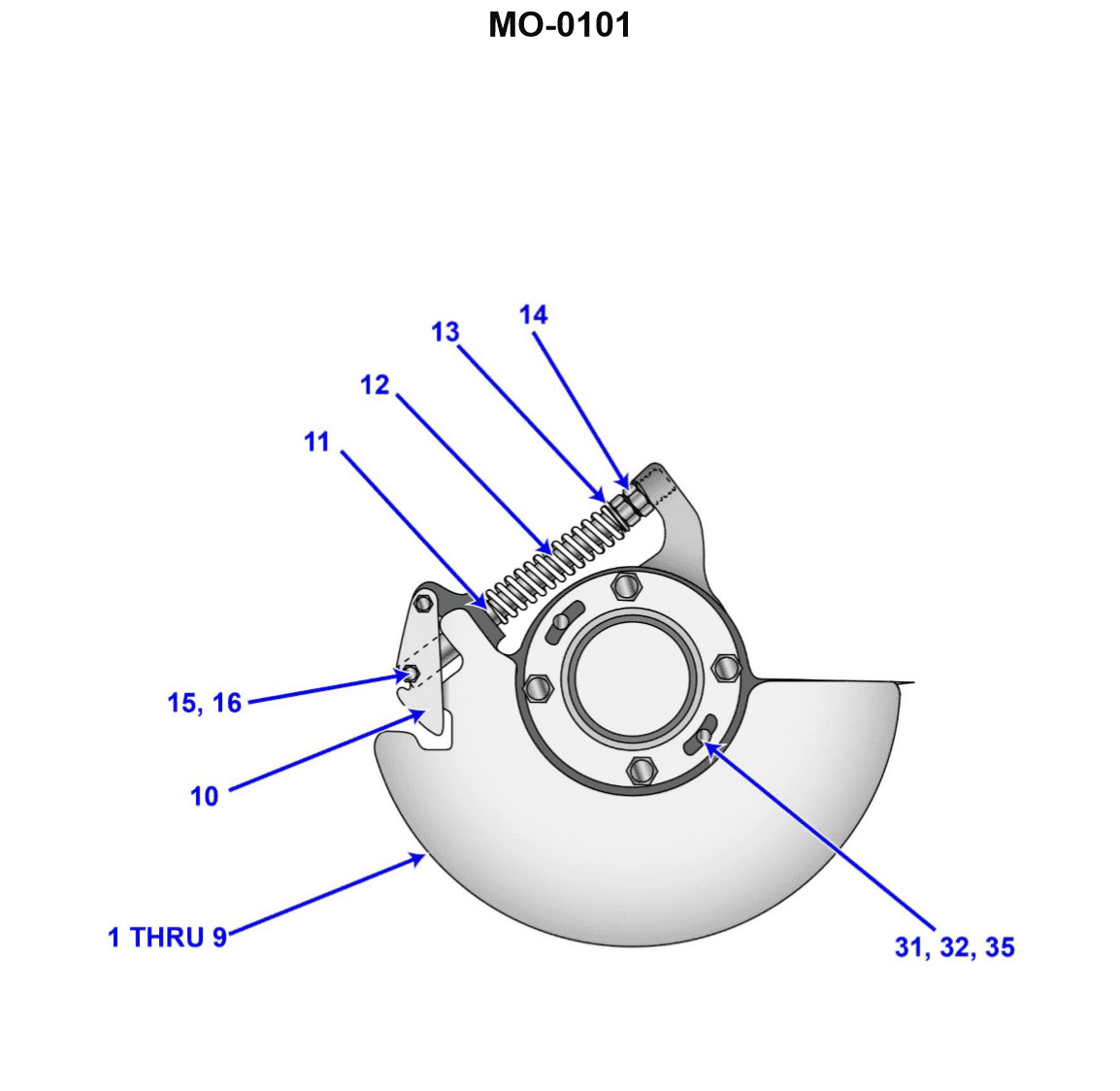
The Correct Answer is D **Explanation for Option D (Correct):** Option D is correct because adjusting a mechanical overspeed trip mechanism on a running engine is inherently dangerous and impractical for precise calibration. 1. **Engine Must Be Stopped:** For safety and accurate adjustment, the engine should be stopped (or at least shut down immediately after tripping and before the next adjustment attempt). Adjusting the sensitive mechanical linkage (often involving weights, springs, and levers) requires the mechanism to be stationary and easily accessible. Furthermore, making adjustments while the engine is running and potentially accelerating to the trip speed is extremely hazardous for personnel and risks major engine damage if the mechanism fails or jams. 2. **Locknut Must Be Retightened After Each Adjustment:** The locknut secures the adjustment setting (e.g., spring tension or position). If the locknut is not retightened after *each* adjustment, the vibration and forces generated during the subsequent test run (when the engine accelerates up to the intended trip speed) could cause the adjustment setting to drift, rendering the test invalid or damaging the components. Since the process requires several test runs and adjustments to achieve accuracy, the setting must be locked down before every test. **Explanation of Why Other Options are Incorrect:** * **A) To adjust the over speed trip, the engine must be running AND the locknut must be retightened after each adjustment.** * **Incorrect:** The engine must be stopped for safety and accurate adjustment. Adjusting a precision mechanism operating near its maximum speed while running is unsafe and prone to error. * **B) To adjust the over speed trip, the engine must be running AND the locknut must be retightened only after the final adjustment.** * **Incorrect:** This is incorrect for two reasons: the engine must be stopped for adjustment, and the locknut must be secured (retightened) before *each* test run to ensure the adjustment holds true during the dynamic forces of the test. * **C) To adjust the over speed trip, the engine must be stopped AND the locknut must be retightened only after the final adjustment.** * **Incorrect:** While the engine must be stopped for adjustment, the locknut must be retightened (secured) before *each* subsequent test run. If it is only retightened after the final setting, the intermediate test settings could be compromised by engine vibration during the test phase.
Pass Your Coast Guard Licensing Exams!
Study offline, track your progress, and simulate real exams with the Coast Guard Exams app