Question 64 OSE02 - Assistant Engineer - OSV
The auxiliary oil-fired water-tube steam boiler on your anchor-handling supply vessel is equipped with a water column similar to that shown in the illustration. If the gauge glass becomes disabled or there is uncertainty associated with the gauge glass reading, the tricocks can be used to determine the boiler water level. What statement best describes the challenge associated with trying to differentiate between steam and water? Illustration MO-0093
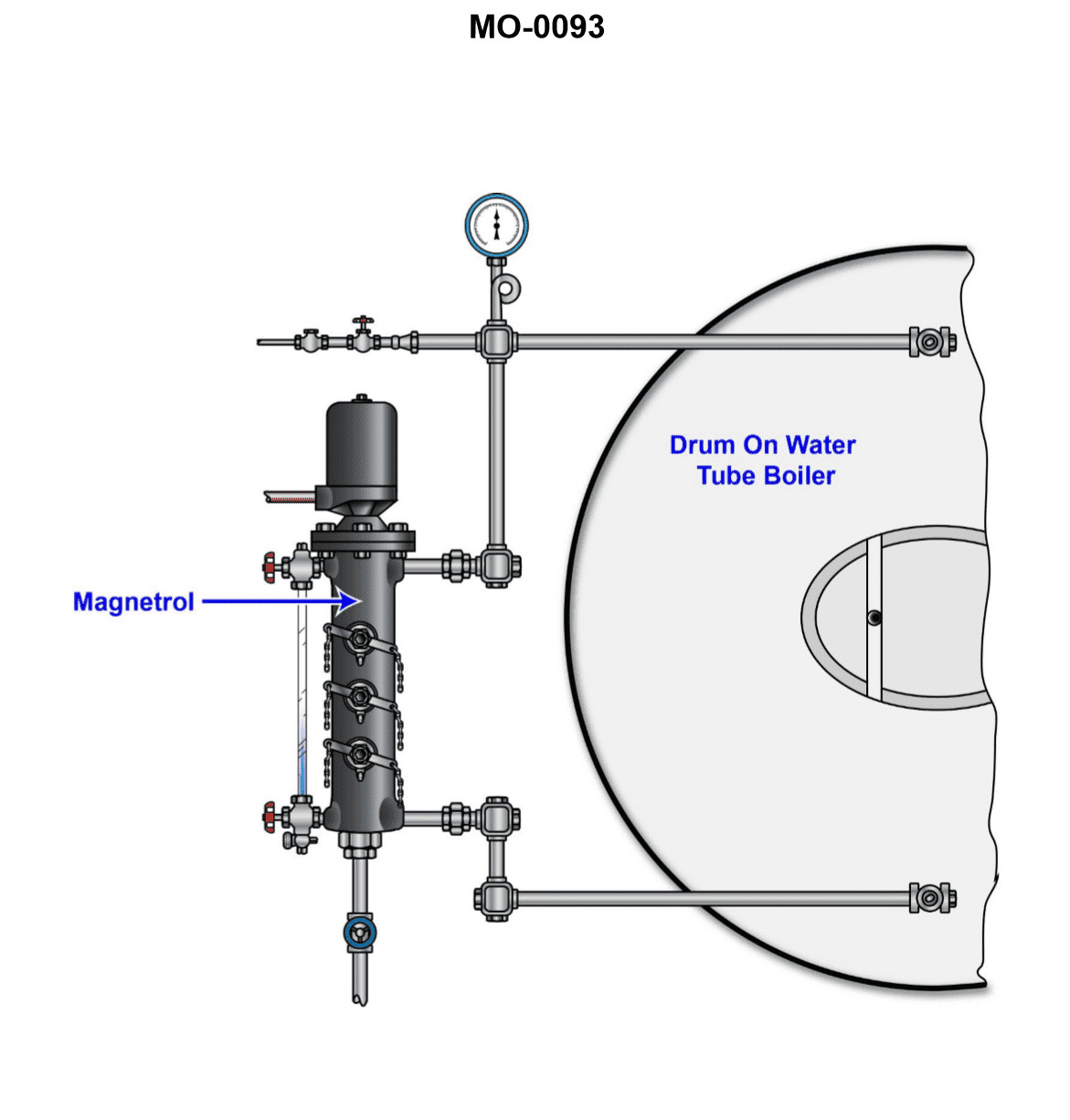
The Correct Answer is A **Explanation of why option A is correct:** Tricocks (or gauge cocks) are used to manually verify the water level in a boiler, particularly when the gauge glass is unreliable. A tricock located below the actual water level, when opened, will discharge pressurized hot water. As this superheated water escapes the boiler and enters the lower pressure atmosphere, its saturation temperature drops rapidly. Consequently, a portion of the hot water instantly "flashes" into steam, creating a mixture of steam and water droplets that appears vigorous and wet. The key challenge in differentiating water from steam is precisely this flashing phenomenon: the escaping liquid (water) is not pure liquid upon exit, as **some** of it instantly turns into vapor (steam). **Explanation of why the other options are incorrect:** * **B) On a tricock situated below the water level, when opened all of the escaping water will flash to steam.** This is incorrect. Only a portion of the pressurized hot water will flash into steam upon depressurization. The rest remains as liquid water droplets, making the discharge visibly wet. If *all* the water flashed to steam, it would be indistinguishable from a tricock positioned above the water level, defeating the purpose of the test. * **C) On a tricock situated above the water level, when opened all of the escaping steam will condense to water.** This is incorrect. When steam escapes from a tricock located above the water level, it is the primary discharge. While some cooling and condensation will occur immediately upon contact with the cooler ambient air, not *all* of the escaping steam will condense instantly. The discharge will be predominantly dry, high-velocity vapor (steam). * **D) On a tricock situated above the water level, when opened some of the escaping steam will condense to water.** While this statement is physically true (some condensation does occur), it does not describe the **challenge** associated with differentiating between steam and water, which is rooted in the flashing of the liquid water upon exit (Option A). The primary challenge lies in the water flashing to steam, not the steam condensing to water.
Pass Your Coast Guard Licensing Exams!
Study offline, track your progress, and simulate real exams with the Coast Guard Exams app