Question 34 MODE02 - Assistant MODU Engineer
The gear drive, shown in the illustration, can have the backlash determined best by using a __________. Illustration MO-0091
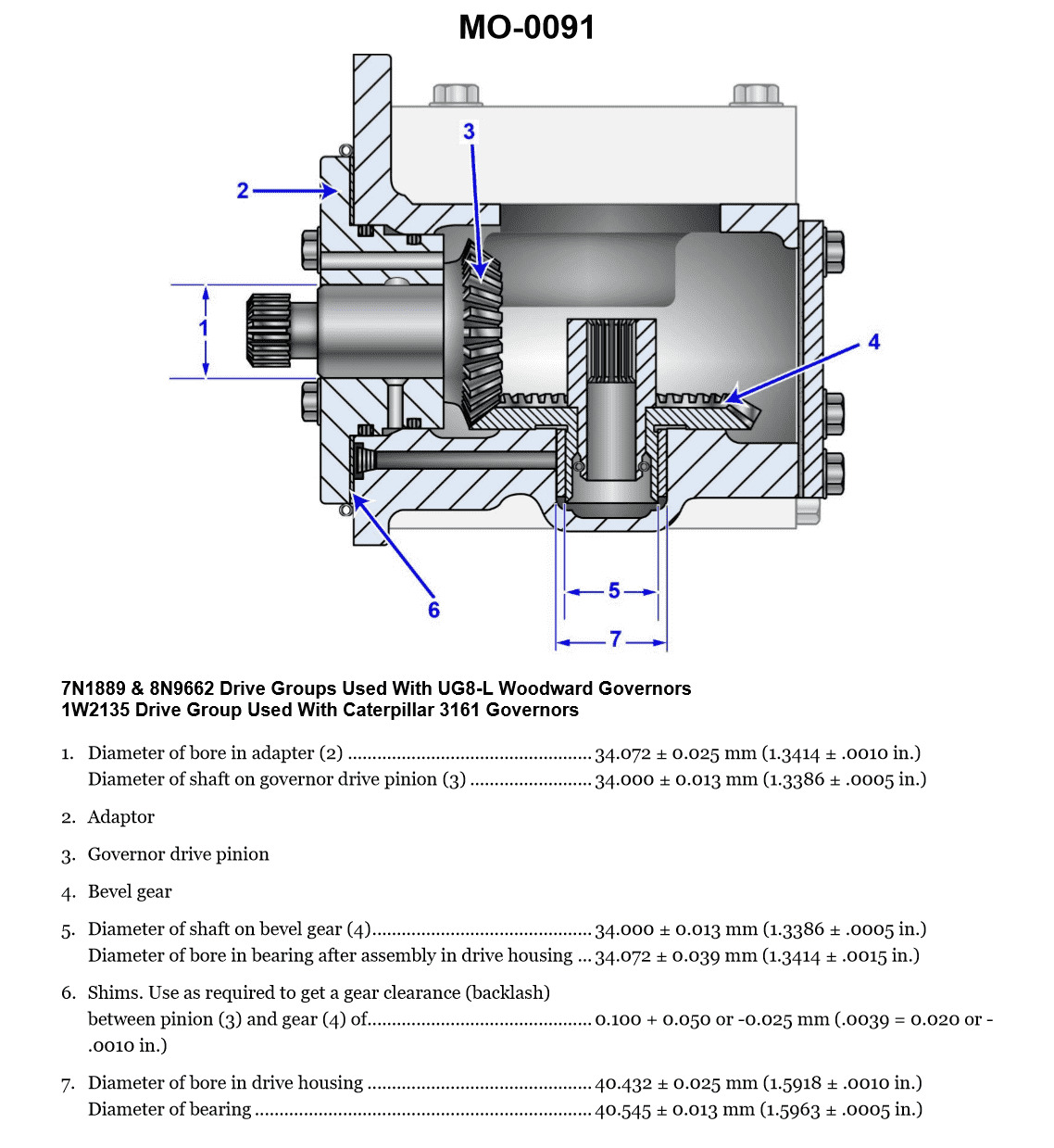
The Correct Answer is D **Explanation for Option D (Feeler gauge):** A feeler gauge is a simple, precise measuring tool consisting of a set of blades of known thickness. When determining the backlash (the clearance or play between mating gear teeth), a feeler gauge is the most common and practical tool used, particularly for static measurements or verification of the set clearance in smaller gearboxes or differential assemblies. The gear teeth are held against one flank, and the feeler gauge is inserted into the gap (backlash) between the opposite flanks of the mating teeth to directly measure the clearance. **Explanation for Incorrect Options:** * **A) Lash indicator:** While "lash" is a synonym for backlash, a "lash indicator" is not a standard, recognized precision measuring tool name in the same way a dial indicator or feeler gauge is. Backlash is typically measured using a dial indicator (often called a "dial indicator with magnetic base") for highly precise dynamic measurements, or a feeler gauge for static checks. * **B) Lead wire:** Lead wire (or Plastigage) is a crushable material used to measure the **clearance** between two loaded bearing surfaces, such as a crankshaft journal and a bearing cap, by measuring how much the wire flattens when the surfaces are torqued together. It is completely unsuitable for measuring the lateral or tangential clearance between gear teeth (backlash). * **C) Red dye indicator:** Red dye penetrant is a method used for **Non-Destructive Testing (NDT)** to detect surface cracks or flaws in materials. It has no application in measuring dimensional clearance like backlash.
Pass Your Coast Guard Licensing Exams!
Study offline, track your progress, and simulate real exams with the Coast Guard Exams app