Question 62 MODE01 - Chief MODU Engineer
The starter control valve in the hydraulic system shown in the illustration is malfunctioning. Before removing the valve, you must first __________. Illustration MO-0049
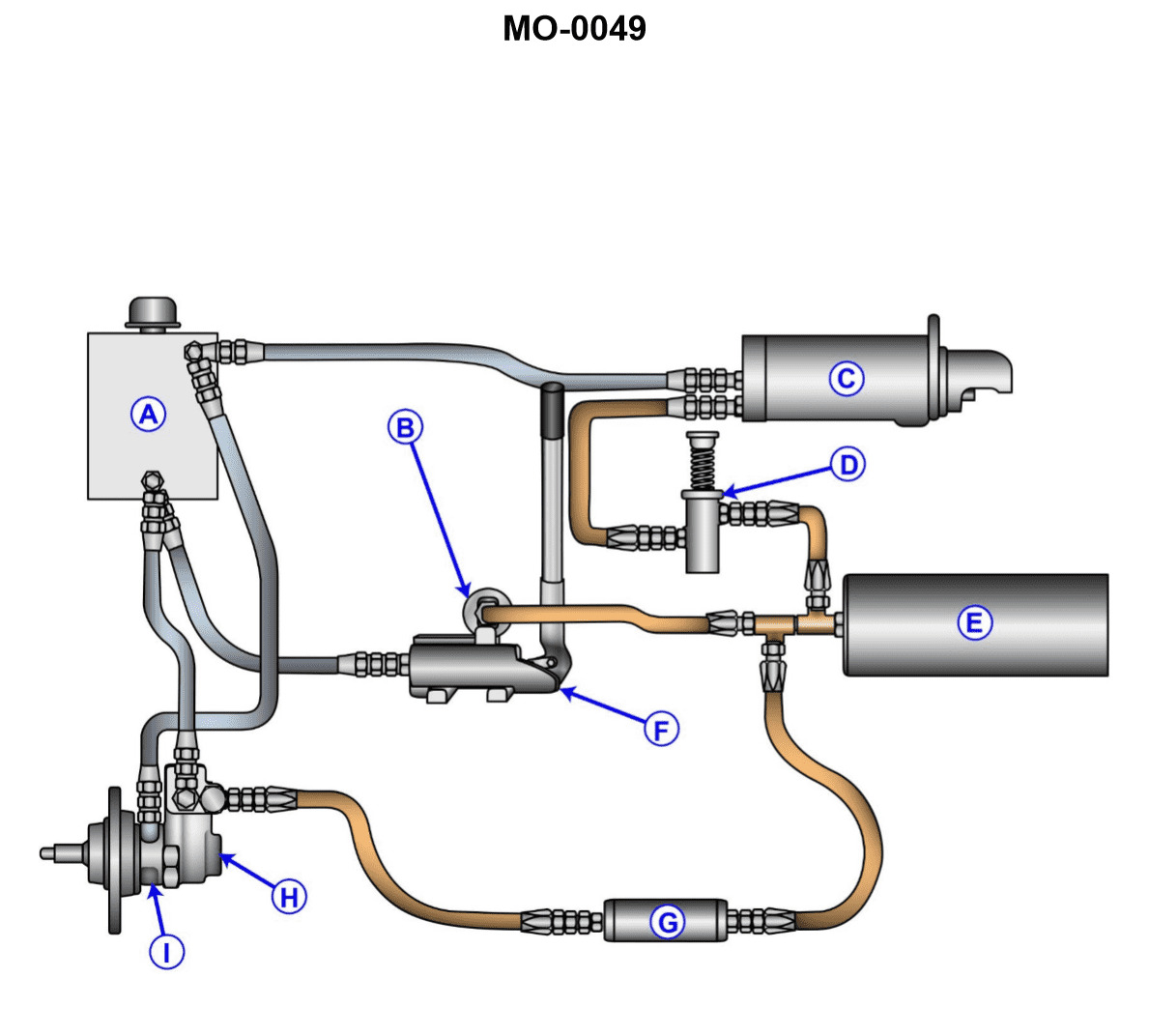
The Correct Answer is C. ### Explanation of Correct Option (C) **C) bleed off all accumulator pressure in "E"** The starter control valve (and any component within the hydraulic system) is subjected to high pressure when the system is operational or charged. Component 'E' is the accumulator, a device designed to store hydraulic fluid under pressure (often very high pressure) to serve as an emergency power source or dampen pressure fluctuations. Before removing any component connected to a pressurized line, especially one directly tied to an accumulator, it is absolutely essential for safety to **depressurize the system**. Failing to bleed off the accumulator pressure before removing the starter control valve would result in the sudden, violent release of high-pressure fluid and potential injury or death to the technician. This safety step is standard protocol in all hydraulic maintenance. ### Explanation of Incorrect Options **A) drain the reservoir** While draining the reservoir might be necessary for certain types of major maintenance, it is not the *first* and most critical safety step before removing a high-pressure component. The reservoir contains fluid, but the immediate danger comes from the high pressure stored in the accumulator and lines, not the volume in the unpressurized reservoir tank. **B) remove all plugs from the system** Removing plugs haphazardly would likely cause fluid loss and potentially introduce contaminants, but it does not address the immediate, critical safety hazard of stored hydraulic pressure in the accumulator and connected lines. **D) ensure that the accumulator piston is in the charged position** Ensuring the accumulator is in the charged position is the opposite of what is required. A charged position means the system is fully pressurized and dangerous. Before maintenance, the technician must ensure the system is **depressurized** (the piston is in the discharged or zero-pressure position).
Pass Your Coast Guard Licensing Exams!
Study offline, track your progress, and simulate real exams with the Coast Guard Exams app