Question 11 DDE01 - Designated Duty Engineer - Unlimited HP
The main engines on your harbor tug utilize a starting system with two air-start motors similar to that shown in the illustration. Upon pushing the start button, the solenoid air valve energizes open, but the air start relay valve fails to receive pilot air, and thus the starter motors and engine fail to rotate. Which of the listed conditions would most likely be the cause of the failure to start? Illustration MO-0200
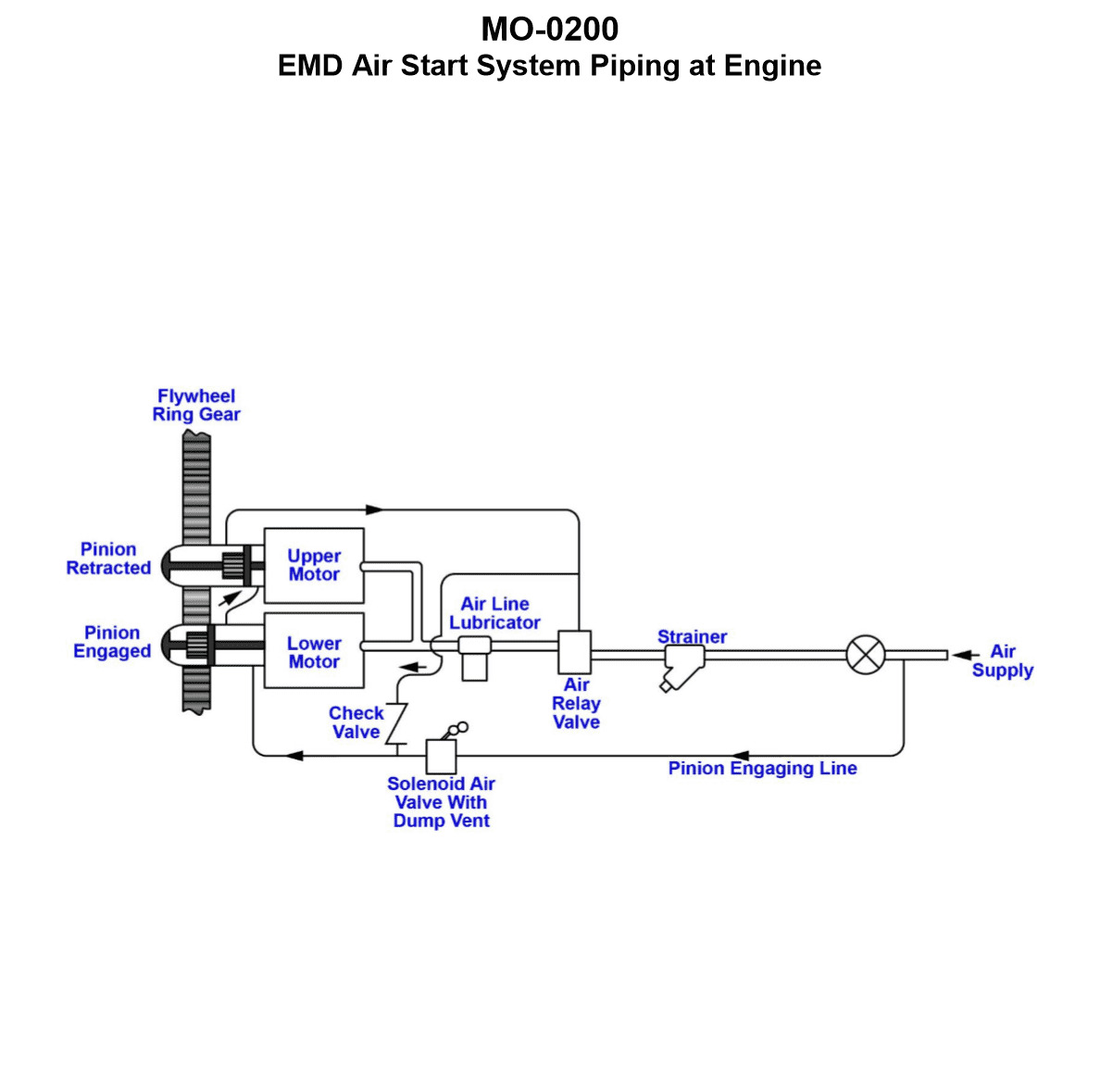
The Correct Answer is B. ### 2. Explanation of Why Option B is Correct The failure described is that the solenoid air valve opens (indicating the initial electrical signal and air supply is present), but the main **air start relay valve fails to receive pilot air**. This means the safety and sequencing mechanism within the starter motors themselves is not confirming readiness, thus inhibiting the main air supply to the motors. Air starting systems on large engines are designed with a critical safety interlock: the main air supply to the starter motors (controlled by the Air Start Relay Valve) is inhibited until the drive pinions are fully engaged with the engine's ring gear. Pilot air is only released *after* successful engagement is confirmed by internal sequencing valves. Option B states: **"The lower pinion fails to engage, which in turn does not allow the upper pinion to engage."** In a dual starter system requiring sequential engagement, if the first (or lower) pinion fails to complete its movement and interlock, the entire engagement sequence stops. Because the final step of the successful engagement sequence—requiring *both* pinions to confirm engagement—is what generates and releases the pilot air signal to the Air Start Relay Valve, the failure of the lower pinion to engage will prevent the necessary pilot air from being sent, perfectly matching the described failure mode. ### 3. Explanation of Why Other Options are Incorrect **A) The upper pinion fails to retract...** This scenario describes a failure of the system to disengage, which occurs *after* the engine has started and the start button is released. A failure to retract would cause grinding or damage post-start, or potentially lock the engine, but it would not prevent the initial supply of pilot air needed to initiate the starting sequence (engagement). **C) The lower pinion fails to retract...** Similar to Option A, retraction is the post-start action. If the lower pinion fails to retract, it would prevent subsequent starting attempts or cause damage after the engine is running, but it does not explain why the pilot air signal failed during the *initiation* phase of the start attempt. **D) The upper pinion fails to engage, which in turn does not allow the lower pinion to engage...** While this also describes an engagement failure, it typically reverses the usual sequence. In most dual starter systems, components engage sequentially (e.g., lower/primary engages first, followed by the upper/secondary) to ensure smooth torque application and proper interlocking. If the lower (primary) mechanism must engage before the system proceeds (as implied in the common failure sequence in Option B), then the failure must occur at the initial critical step. If the lower pinion is the critical first component, its failure (Option B) is the most likely cause for the entire sequence to halt and prevent the release of pilot air.
Pass Your Coast Guard Licensing Exams!
Study offline, track your progress, and simulate real exams with the Coast Guard Exams app