Question 57 3AE01 - Third Assistant Engineer
What is the purpose of the mixing tank shown in the illustration? Illustration MO-0058
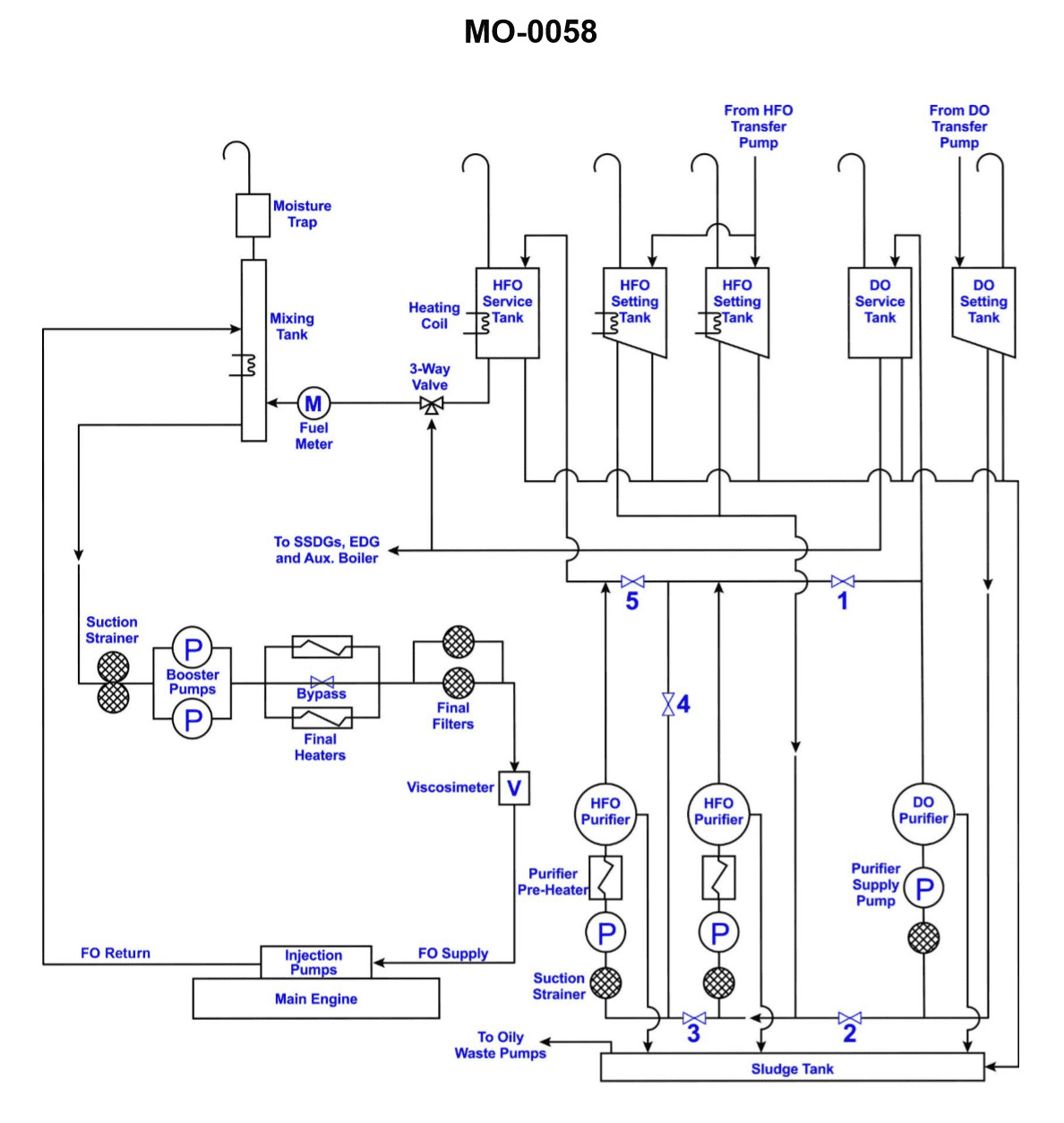
The Correct Answer is D **Explanation for Option D ("All of the above"):** The mixing tank (or settling tank/service tank assembly) serves several crucial purposes when dealing with heavy fuel oil (HFO) systems, especially in marine applications where different grades of fuel may be used, or when preparing HFO for use. * **A) To permit vaporized lighter fuel fractions to vent:** HFO can contain volatile components (lighter fractions) that may vaporize when the fuel is heated (e.g., in the settling or service tanks). These vapors must be safely vented to prevent pressure buildup and reduce the risk of explosion or fire. * **B) To prevent overheating of the day tank:** While the primary function of the mixing tank itself isn't direct cooling, it is often part of the fuel treatment system that includes heating the HFO to reduce viscosity. Controlling the temperature of the fuel delivered to the service/day tank, and allowing for gradual temperature changes, ensures the tank and its contents remain within safe operating parameters, preventing localized overheating which could lead to instability or excessive vaporization. * **C) To enable the changeover from hot heavy fuel to cold distillate fuel to occur gradually:** During a fuel changeover (often required before maneuvering or entering Emission Control Areas), the engine must transition from hot HFO to cold distillate fuel (MDO/MGO). If this transition occurs too rapidly, it can cause severe thermal shock to the fuel pumps and injection equipment. The mixing tank, or the transition process often managed around it, allows the two fuels to be blended or introduced sequentially, ensuring the temperature drop is controlled (typically around 2°C per minute) and gradual, protecting the engine components. Since the mixing tank/service tank arrangement handles heating, venting, and controlled changeover procedures, all three described functions (A, B, and C) are valid roles associated with the operation and safety of the fuel system, making "All of the above" the correct comprehensive answer. **Explanation of Incorrect Options (A, B, and C as standalone answers):** Although A, B, and C are all true functions of the fuel system incorporating the mixing tank, none of them alone captures the complete purpose of the component as effectively as option D. * **A) To permit vaporized lighter fuel fractions to vent:** While true, this ignores the equally critical functions of temperature control and gradual changeover. * **B) To prevent overheating of the day tank:** While true (as part of overall temperature control), this is an incomplete description, omitting safety venting and operational changeover requirements. * **C) To enable the changeover from hot heavy fuel to cold distillate fuel to occur gradually:** While critical for machinery protection, this ignores the continuous operational requirements of heating and venting the HFO.
Pass Your Coast Guard Licensing Exams!
Study offline, track your progress, and simulate real exams with the Coast Guard Exams app