Question 58 3AE01 - Third Assistant Engineer
The vessel to which you are assigned has a main engine fuel system as shown in the illustration. Besides preventing the attached fuel oil pump and the hand priming fuel oil pump from discharging through the other, what other purpose do the anti-flood check valves serve? Illustration MO-0152
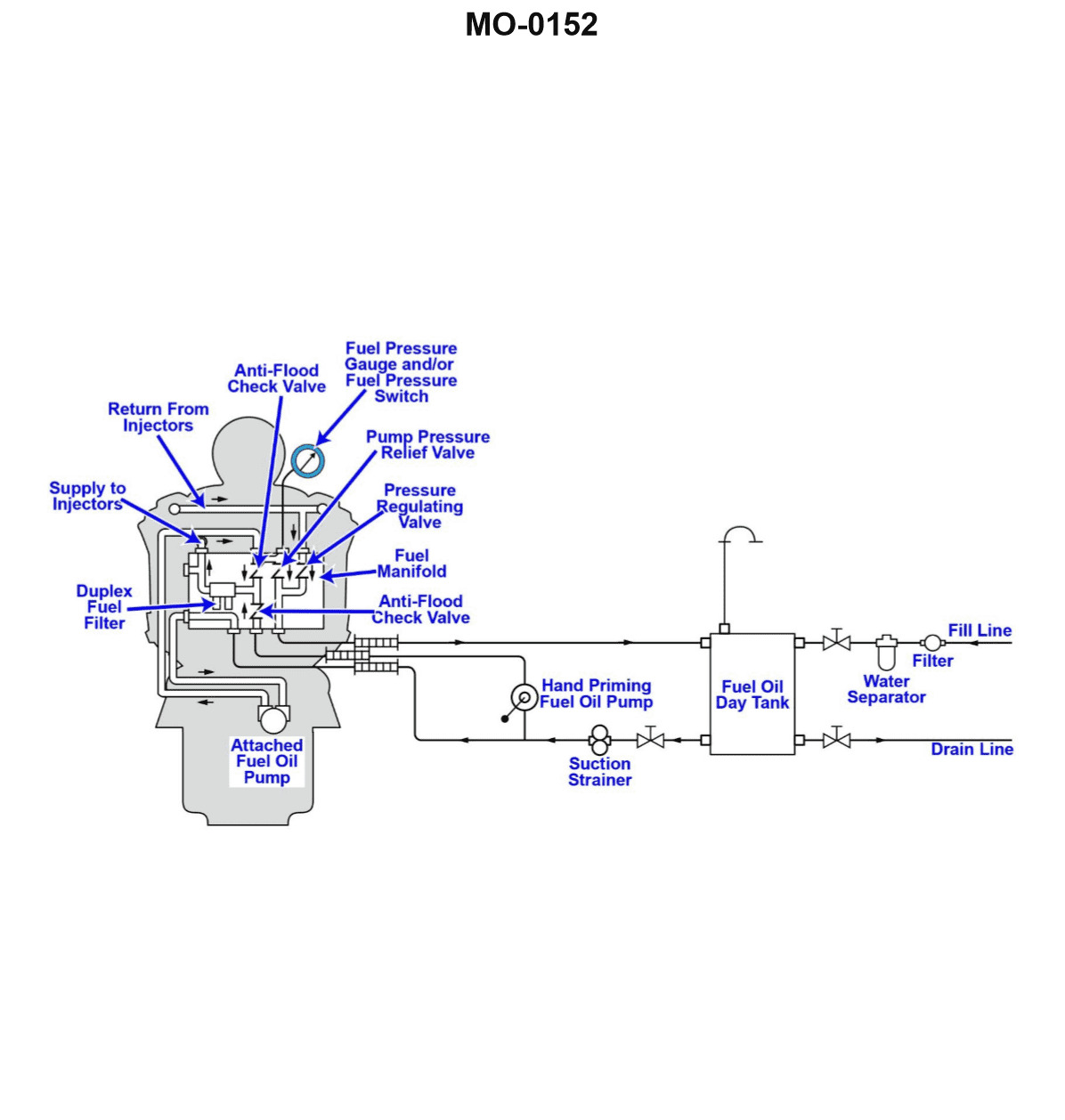
The Correct Answer is D **Explanation for Option D (Correct Answer):** Anti-flood check valves (or non-return valves) in a fuel oil system are unidirectional devices that allow flow in only one direction. When installed between the main engine and the fuel source (like a day tank), especially when the engine is the lowest point in the system (i.e., the day tank is located below the engine), they serve a critical safety and operational function. If the engine is shut down, the fuel system is static. Without the check valve, gravity would cause the fuel oil remaining in the engine's fuel lines (or injection pump housing) to drain backward into the day tank, potentially leaving air pockets in the system. When the engine is restarted, this air could cause misfires or prevent the engine from starting altogether. Therefore, the anti-flood check valves prevent the backflow of fuel from the engine back toward the day tank when the engine is shut down and the day tank is situated below the engine, thus ensuring the fuel system remains primed. **Explanation for Other Options (Incorrect):** * **A) They prevent backflow of fuel from the engine to the day tank when the engine is running and when the day tank is located above the engine.** * This is incorrect. When the engine is running, the fuel pump maintains positive pressure, naturally preventing backflow. Furthermore, if the day tank is above the engine, gravity already encourages flow toward the engine, making backflow to the day tank less likely to be caused by drainage or gravity. * **B) They prevent backflow of fuel from the engine to the day tank when the engine is shut down and when the day tank is located above the engine.** * This is incorrect. If the day tank is located above the engine, the head pressure from the tank (due to gravity) would naturally force the fuel forward into the engine system, not backward, even when the engine is shut down. A check valve would still be needed to prevent pressure pulses from the pump from going backward, but the primary anti-flood/anti-drain function relates to the scenario where the tank is below the engine. * **C) They prevent backflow of fuel from the engine to the day tank when the engine is running and when the day tank is located below the engine.** * This is incorrect. When the engine is running, the attached fuel oil pump is actively pushing fuel toward the engine, creating pressure that prevents backflow. The critical role of preventing gravity-induced backflow (draining/siphoning) occurs when the pump is *off* (engine shut down), not while it is running.
Pass Your Coast Guard Licensing Exams!
Study offline, track your progress, and simulate real exams with the Coast Guard Exams app