Question 12 UFIV02 - Assistant Engineer - UFIV
The various auxiliary diesel engines fitted on your uninspected fishing trawler may employ a variety of different cranking methods for engine starting. What type of cranking method is shown in the illustration? Illustration MO-0044
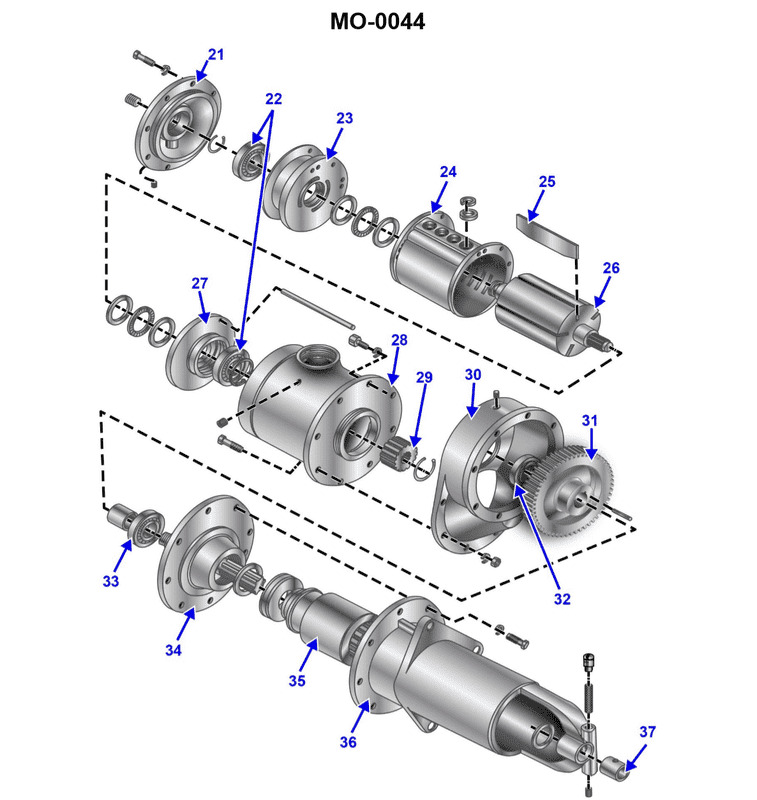
The Correct Answer is D **Explanation for D (Air cranking motor):** Option D is correct because the illustration MO-0044 typically depicts the components associated with a pneumatic starting system (air cranking motor). This type of system uses compressed air, stored in reservoirs, to drive a vane-type motor or to directly introduce air into the cylinders of the main engine (though for auxiliary engines, a vane motor is more common). Key visual indicators in such illustrations usually include air lines, an air distributor/starter motor assembly, and perhaps associated valves, which clearly differentiate it from electric or hydraulic systems. Air starting is very common on larger marine diesel auxiliary engines due to its reliability, high torque output, and the readily available supply of compressed air typically maintained onboard marine vessels. **Explanation for why other options are incorrect:** * **A) Hydraulic cranking motor:** A hydraulic cranking system would show components such as a hydraulic pump, reservoir, high-pressure fluid lines, and a hydraulic starter motor. The visual characteristics of the illustrated system (air lines/pneumatic components) do not match the components required for a hydraulic fluid-driven system. * **B) Electric cranking motor:** An electric cranking system would primarily show a large battery bank, heavy-gauge electrical cables, a solenoid, and a conventional geared electric starter motor. The components shown in the illustration do not align with the standard electrical components necessary for a high-power DC starting circuit. * **C) Gasoline engine cranking motor:** While historically used for very large engines (often called "pony motors"), a gasoline engine cranking motor would involve a small, dedicated internal combustion engine, complete with its own fuel system (tank, carburetor), ignition system, and exhaust, coupled to the main engine flywheel. The components depicted are clearly a pneumatic/air system, not a small gasoline engine assembly.
Pass Your Coast Guard Licensing Exams!
Study offline, track your progress, and simulate real exams with the Coast Guard Exams app