Question 20 ONC05 - Master or Mate of LT 200 GRT
BOTH INTERNATIONAL & INLAND You are on Vessel "A" engaged in fishing in a narrow channel as shown in illustration D037RR below. Vessel "B" is a tanker proceeding in the channel. Vessel "B" sounds five short and rapid blasts. What action should you take?
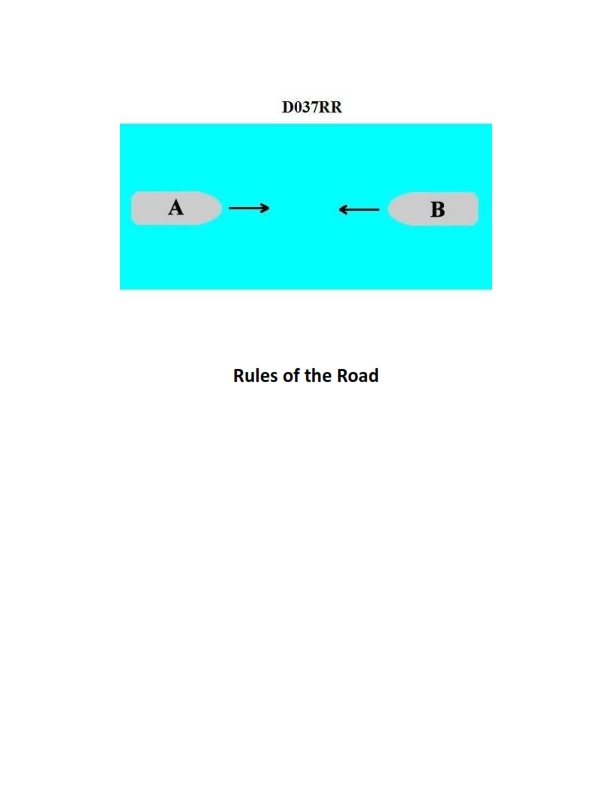
The Correct Answer is D. **Explanation for D (not impede the passage of vessel "B"):** Vessel "A" is engaged in fishing, making it a "vessel restricted in her ability to maneuver" concerning navigation, but specifically, it is a **"fishing vessel"** under the COLREGs (International Regulations for Preventing Collisions at Sea). Vessel "B" is a tanker proceeding in a narrow channel. According to **Rule 9 (Narrow Channels)**, a vessel engaged in fishing shall not impede the passage of any other vessel navigating within a narrow channel. Furthermore, Vessel "B" is sounding five short and rapid blasts, which is the danger signal (Rule 34(d)), indicating that Vessel "B" doubts whether sufficient action is being taken by Vessel "A" to avoid collision or allow safe passage. Given the circumstances (fishing vessel in a narrow channel encountering a large vessel/tanker), Vessel "A" has the specific duty under Rule 9(c) to **not impede the passage** of Vessel "B" and must therefore take immediate action to clear the path. **Explanation of why other options are incorrect:** **A) maintain course and speed:** This action is incorrect and highly dangerous. Maintaining course and speed directly violates Rule 9(c), which requires the fishing vessel not to impede the passage of the vessel navigating in the channel. Furthermore, ignoring the danger signal (five blasts) would be reckless and likely lead to a collision. **B) not answer the whistle signals from vessel "B":** While the five-blast signal is a warning/danger signal that doesn't necessarily require a specific answer signal (like passing signals do), the primary error here is focusing solely on the lack of an answer. The fundamental duty of Vessel "A" is to take action to clear the channel, not just remain silent. Silence implies compliance with the duty to not impede, but active clearance (D) is the required operational action resulting from that duty, especially after receiving a danger signal. **C) sound one prolonged followed by two short blasts:** This signal is designated for a vessel being overtaken (Rule 34(c)). Vessel "A" is not being overtaken; it is a fishing vessel in a narrow channel being encountered by a vessel required to stay within that channel. Using this signal would be inappropriate and misleading in this scenario.
Pass Your Coast Guard Licensing Exams!
Study offline, track your progress, and simulate real exams with the Coast Guard Exams app