Question 31 GLI07 - OUPV
BOTH INTERNATIONAL & INLAND A vessel displaying the shape shown in illustration D010RR below is which of the following?
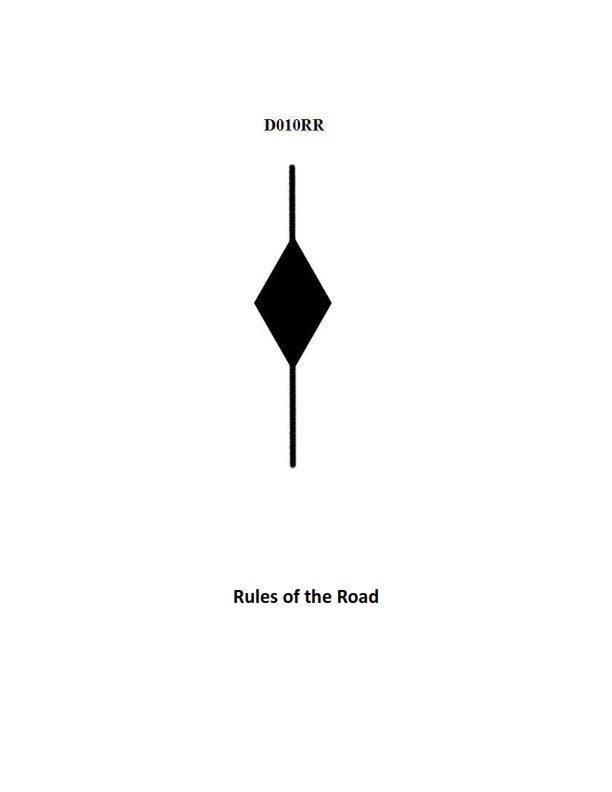
The Correct Answer is C **Explanation for C being correct:** The illustration D010RR depicts three shapes displayed vertically: a diamond shape between two cones (point to point). This specific combination of day shapes is prescribed by the International Regulations for Preventing Collisions at Sea (COLREGs), Rule 24 (Towing and Pushing). Rule 24(a)(i) states that a vessel when towing or pushing, whose length of the tow (measured from the stern of the towing vessel to the after end of the tow) exceeds 200 meters, shall exhibit "a diamond shape where it can best be seen." This diamond shape is displayed on the towing vessel in addition to the masthead light(s) and sidelights required for towing. Therefore, the display of the diamond shape indicates that the vessel has a tow exceeding 200 meters in length, making option C correct for both International and Inland waters (as Inland Rules generally mirror this COLREG requirement). The illustration likely shows the towing vessel displaying this shape. **Explanation of why other options are incorrect:** * **A) Is at anchor:** A vessel "at anchor" displays a single black ball where it can best be seen (COLREG Rule 30). The combination of shapes shown (two cones and a diamond) is not used for anchoring. * **B) Is not under command:** A vessel "not under command" (NUC) displays two black balls in a vertical line where they can best be seen (COLREG Rule 27). The combination of shapes shown does not represent a vessel NUC. (Note: While the two cones shown in the diagram might sometimes be confused with the two balls for NUC, the presence of the diamond shape explicitly changes the identification to towing.) * **D) Has a tow that is carrying hazardous cargo:** There is no specific day shape defined by COLREGs or standard Inland Rules simply to indicate that a tow is carrying hazardous cargo. Regulations regarding hazardous cargo typically involve specific placards or markings on the barges/tows themselves, but not a unique set of shapes displayed on the towing vessel for collision avoidance purposes. The shapes shown specifically relate to the *length* of the tow.
Pass Your Coast Guard Licensing Exams!
Study offline, track your progress, and simulate real exams with the Coast Guard Exams app