Question 15 DDE04 - Designated Duty Engineer - 1000-4000 HP
The various auxiliary diesel engines fitted on your sea-going tug may employ a variety of different starting systems. What type of starting system is shown in the illustration? Illustration MO-0049
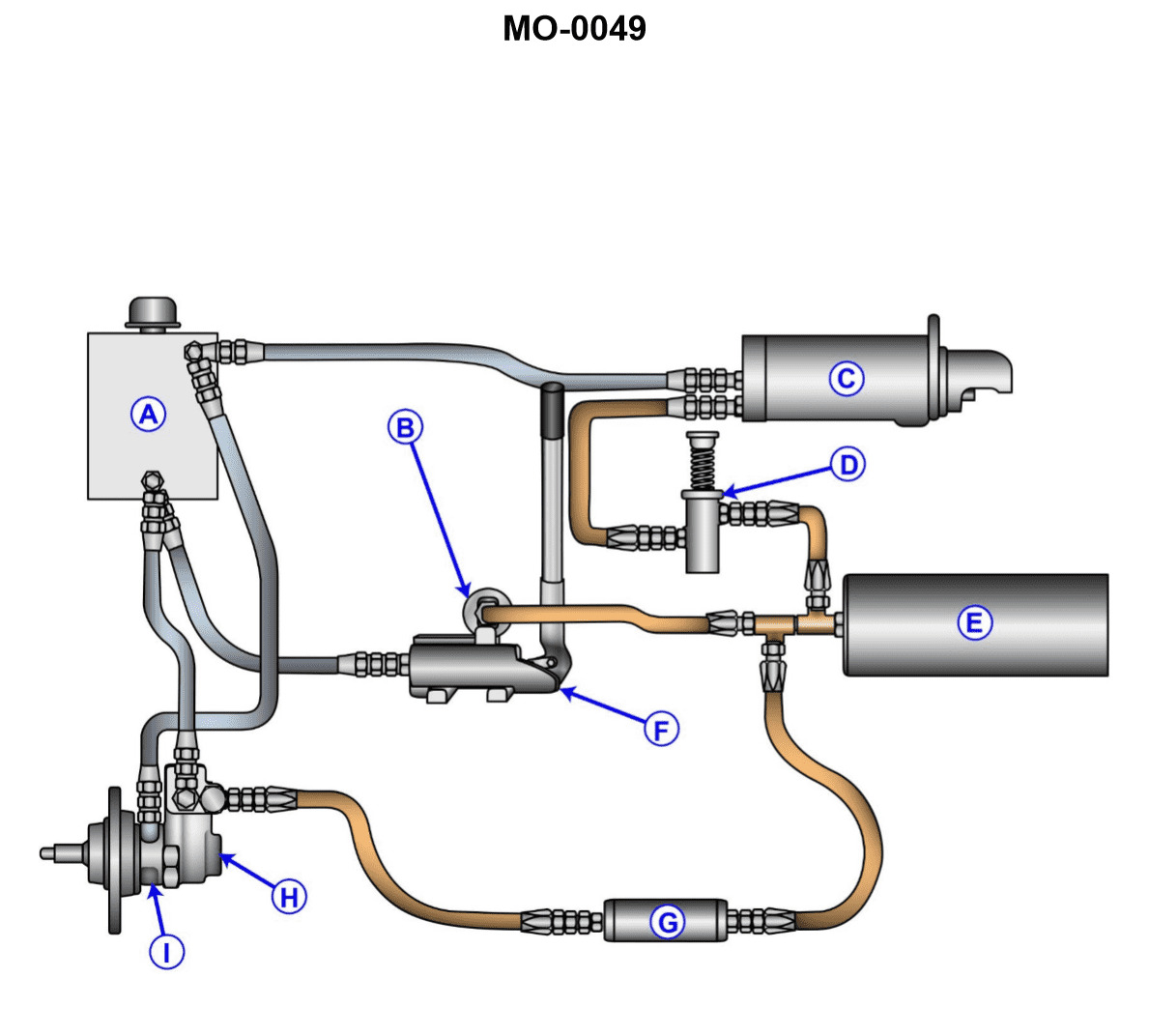
The Correct Answer is D **Explanation for Option D (Hydraulic power operated system) being correct:** The starting system illustrated in typical marine engineering references (often identified by the number MO-0049 or similar designations in training materials) usually depicts the key components of a hydraulic starting system. These components typically include a manually operated or engine-driven pump (to charge the accumulator), a high-pressure accumulator (a storage vessel for pressurized oil), a control valve, and a hydraulic motor/starter unit directly mounted on the engine flywheel or pinion gear. The defining feature is the high-pressure fluid (oil) stored in the accumulator used to drive the starting motor, distinguishing it clearly from air (pneumatic) or electrical systems. **Explanation for why the other options are incorrect:** * **A) Electric power operated system:** This system uses batteries and a conventional electric starter motor (like those found in cars, but usually larger for marine auxiliary engines). The illustration would primarily show large cables, batteries, and the starter motor itself, lacking the pumps, accumulator, and hydraulic lines characteristic of option D. * **B) Gas engine power operated system:** This is a very uncommon or specialized starting method for modern marine auxiliary diesels. If used, it would typically involve a small gasoline or LPG engine used solely to spin the main diesel engine. The components illustrated do not match a small auxiliary combustion engine setup. * **C) Pneumatic power operated system:** This system uses high-pressure compressed air stored in receivers (air bottles) to turn the engine. While it uses an accumulator/receiver like a hydraulic system, the starter motor and lines are designed for air, and the illustration would typically show an air compressor and large air receivers, but not the distinct oil pump and fluid accumulator components used specifically in hydraulic starters.
Pass Your Coast Guard Licensing Exams!
Study offline, track your progress, and simulate real exams with the Coast Guard Exams app