Question 14 DDE04 - Designated Duty Engineer - 1000-4000 HP
The various auxiliary diesel engines fitted on your harbor tug may employ a variety of different cranking methods for engine starting. What type of cranking motor is shown in the illustration? Illustration MO-0044
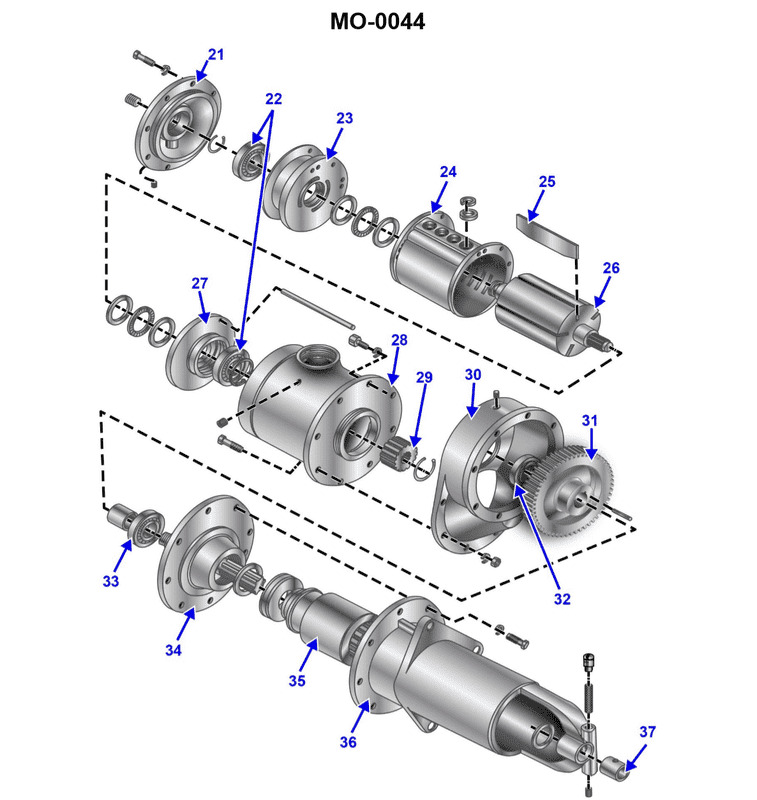
The Correct Answer is C **Explanation for Option C (Air cranking motor):** An air cranking motor (or pneumatic starter) utilizes high-pressure compressed air to turn a turbine or vane mechanism, which subsequently engages the engine flywheel to initiate rotation. In marine and heavy industrial applications, these starters are very common on medium-sized diesel engines, such as those used for auxiliary power on tugboats. The illustration (MO-0044) typically depicts the distinct features of an air motor: a robust, often cylindrical housing containing the turbine or vanes, and a large inlet port specifically designed for connecting the high-pressure air supply line (lacking the heavy electrical terminals characteristic of electric motors). Air starting is favored in marine environments due to its high torque output and reliability, utilizing the ship's readily available compressed air system. **Explanation for Incorrect Options:** **A) Gasoline engine cranking motor:** This option is incorrect because a gasoline starting motor is typically a very small auxiliary engine used to turn over the main engine (common on vintage tractors or large, old stationary engines). Modern marine auxiliary diesels do not use this method. **B) Hydraulic cranking motor:** While powerful, hydraulic starters are less common than air or electric starters in standard auxiliary marine applications. They rely on high-pressure oil lines rather than air lines and possess a distinct internal gear pump structure, which would not match the appearance of a pneumatic turbine starter. **D) Electric cranking motor:** Electric motors are extremely common, but they are visually distinguished by the presence of heavy electrical terminals (for high amperage battery cables) and a large solenoid housing. If the illustration shows a robust starter with large inlet ports suitable for high-pressure air and lacks heavy copper terminals, it is definitively an air motor, not an electric motor.
Pass Your Coast Guard Licensing Exams!
Study offline, track your progress, and simulate real exams with the Coast Guard Exams app