Question 20 CEL01 - Chief Engineer - Limited
A command signal input to the steering gear has initiated rudder movement for 20° right rudder. The follow-up mechanism at the beginning of the rudder movement will __________. Illustration GS-0123
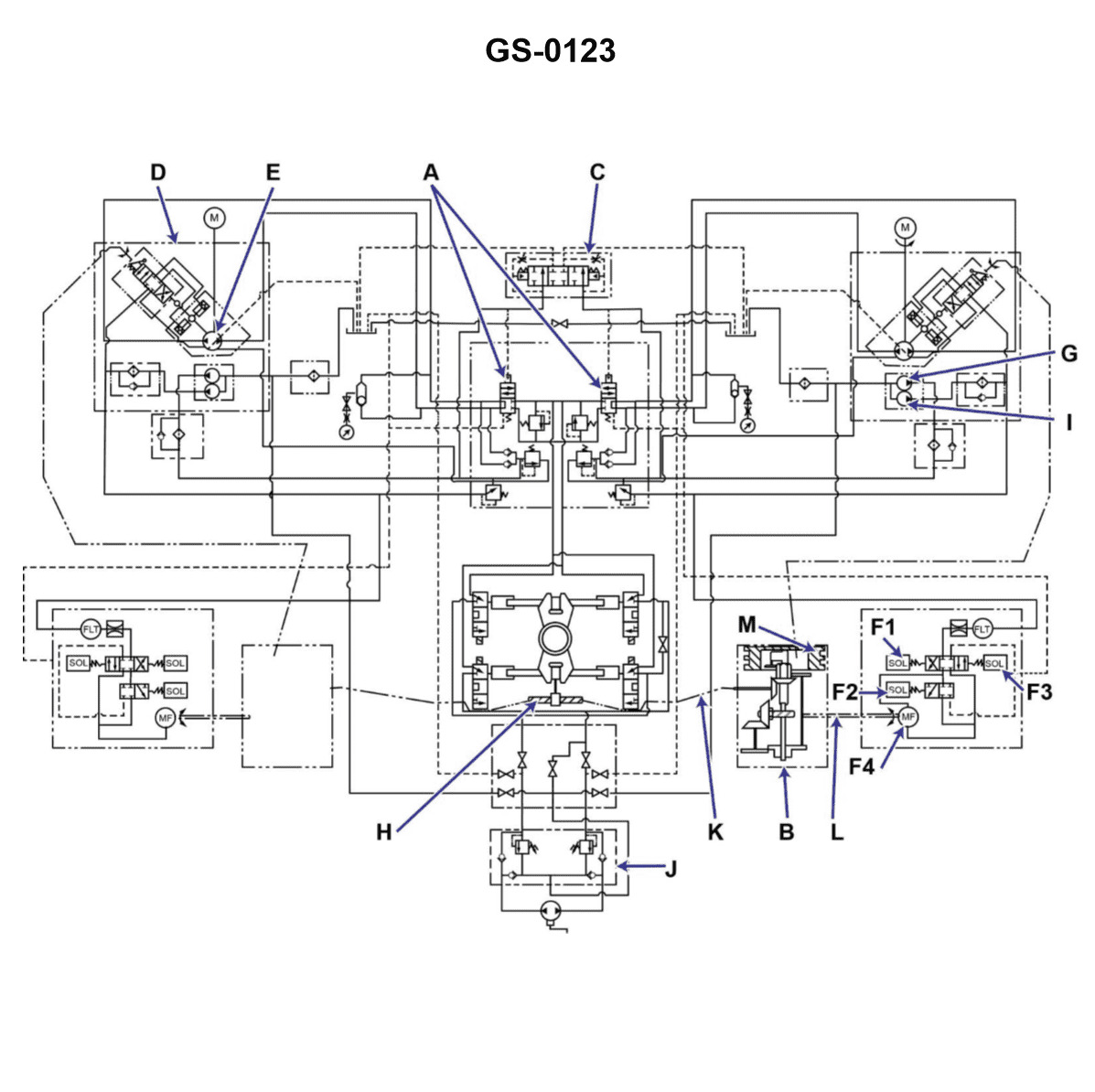
The Correct Answer is C ### 2. Explanation of why option C is correct The follow-up mechanism (often called the hunting gear or feedback mechanism) is physically linked to the rudder stock. Its primary function is to feed back the actual position of the rudder to the control system. 1. **"Be in motion":** Since the command signal (20° Right) has been initiated, and the variable stroke pump has started supplying hydraulic fluid, the rudder is moving. Because the rudder is moving, the follow-up mechanism, which is mechanically linked to the rudder, **must also be in motion** (following the rudder). 2. **"With a null input":** This phrase refers to the mechanism's role in the feedback loop. The system is designed such that when the command position matches the rudder position, the input signals are equalized, creating a "null position" or "null stroke" for the pump. However, at the very beginning of the movement, the mechanism is simply registering the initial movement of the rudder. While the mechanism is physically moving, its purpose is to create a signal that *will eventually* neutralize the command. Since the mechanism is solely responding to and tracking the rudder's motion, it is considered to be moving *with the rudder* but is not, at this instant, providing the counter-input necessary to neutralize the command signal. This phrasing suggests the mechanism is tracking the movement itself, providing a zero differential signal relative to the rudder movement, even though the command signal is still active. ### 3. Explanation of why the other options are incorrect **A) not be in motion, thus a null input** Incorrect. If the follow-up mechanism were not in motion, the rudder would not be moving (or, if the rudder were moving, the feedback loop would be broken). Since the question states that the rudder movement has been initiated, the mechanism linked to it must be in motion. **B) be in motion providing an input to place the variable stroke pump on maximum stroke** Incorrect. The **command signal** initiated the maximum stroke required to start the rudder moving toward 20°. The purpose of the follow-up mechanism is exactly the opposite: it provides the *feedback* input designed to **reduce and eventually stop** the pump stroke once the rudder reaches the commanded position. **D) be in motion providing an input to place the variable stroke pump at null stroke** Incorrect. If the follow-up mechanism immediately provided an input to place the pump at null stroke (zero flow), the rudder movement would instantly stop. Since the command is 20° right, and the movement has just begun, the pump must continue to stroke to move the rudder to the desired position.
Pass Your Coast Guard Licensing Exams!
Study offline, track your progress, and simulate real exams with the Coast Guard Exams app