Question 982 Rules of the Road
90% to passBOTH INTERNATIONAL & INLAND Vessels "A" and "B" are meeting in a narrow channel as shown in illustration D029RR below but are not in sight of one another due to restricted visibility. Which statement is TRUE concerning whistle signals between the vessels?
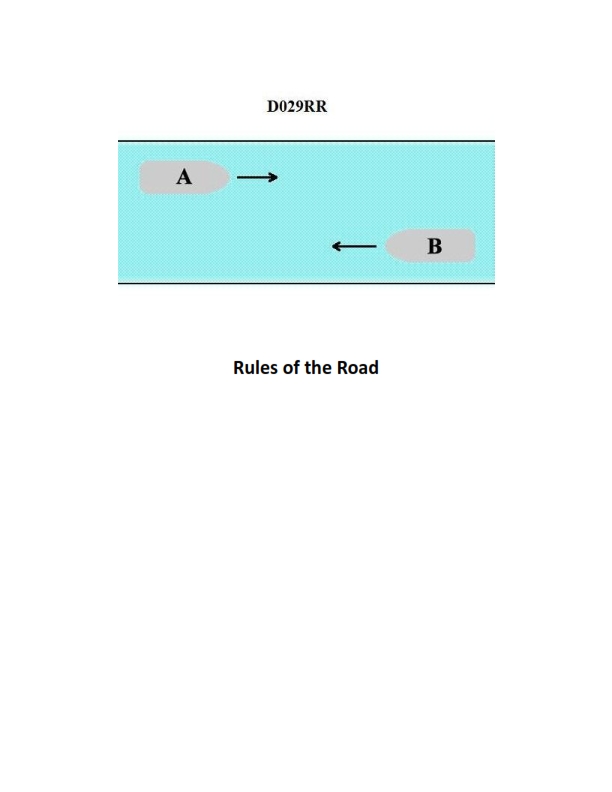
The correct answer is D) None of the above statements is TRUE. The reason this is the correct answer is that in a narrow channel with restricted visibility, as described in the scenario, the appropriate whistle signals are not one short blast, two short blasts, or any combination thereof. Instead, the International Regulations for Preventing Collisions at Sea (COLREGS) Rule 34(e) states that in this situation, both vessels should sound the danger signal, which is five or more short and rapid blasts on the whistle. This alerts the other vessel to the restricted visibility and potential danger of the situation, prompting both vessels to take appropriate action to avoid a collision.
Ready to test your knowledge?
Take a Rules of the Road Practice ExamPass Your Coast Guard Licensing Exams!
Study offline, track your progress, and simulate real exams with the Coast Guard Exams app