Question 144General Subjects - 1st Asst/Chief
70% to passReferring to the illustration, suppose after initiating the oil discharge mode, the oily- water separator fails to come out of the oil discharge mode in a timely fashion. Cracking open the upper sampling valve reveals the presence of water exiting under a positive pressure. What is most likely the cause? Illustration GS-0175
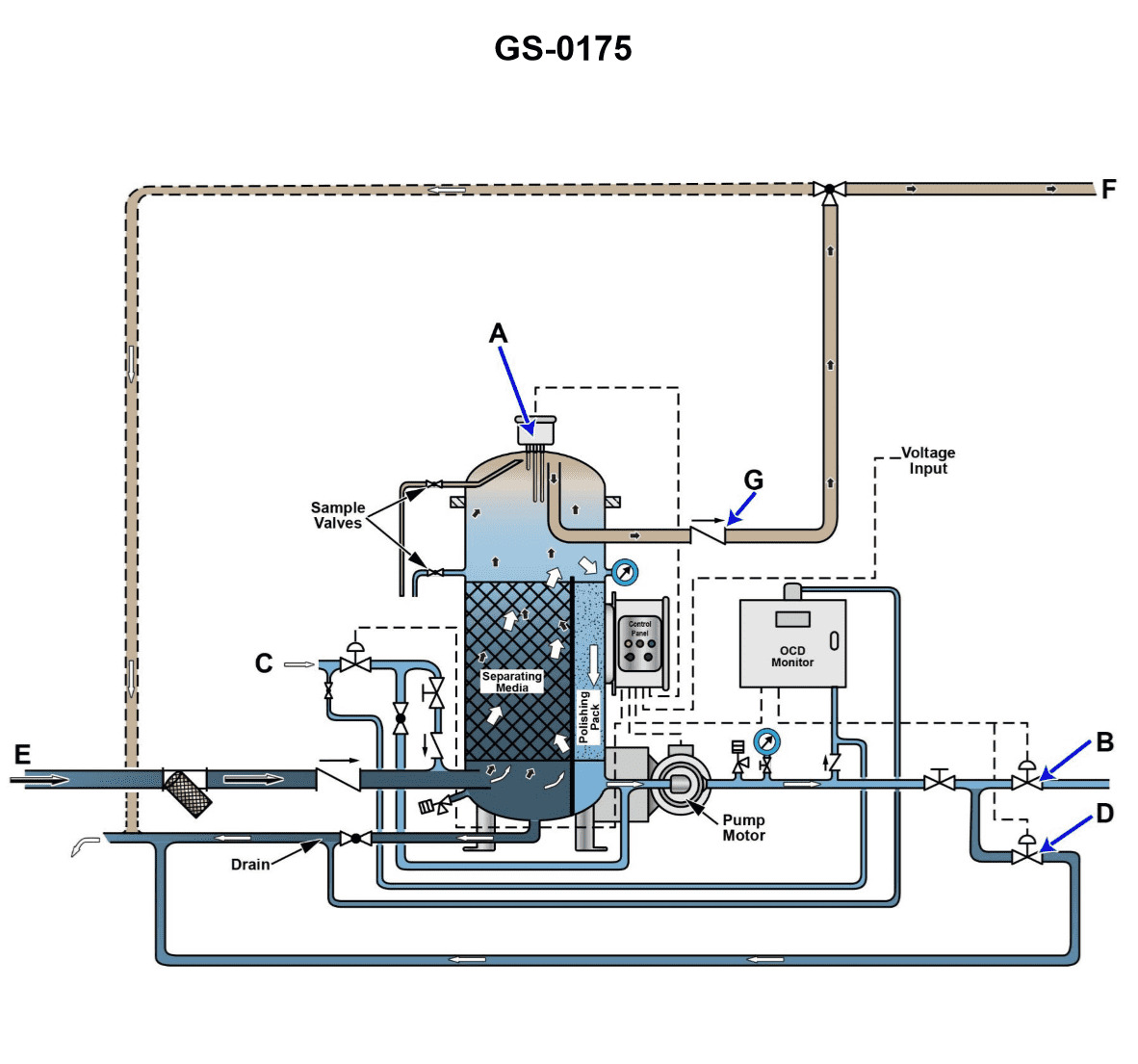
The correct answer is B) The upper oil/water interface detection probe fails to end the oil discharge mode. This is the correct answer because the key information provided is that the oily-water separator fails to come out of the oil discharge mode in a timely fashion, and there is water exiting under positive pressure from the upper sampling valve. This indicates that the upper oil/water interface detection probe, which is responsible for sensing when the oil layer has been fully discharged and signaling the end of the oil discharge mode, has failed to function properly. The other options are incorrect because they do not address the specific issue of the oily-water separator remaining in the oil discharge mode. For example, option A would result in no oil discharge at all, which is not the case here, and options C and D do not relate to the probe that controls the transition out of the oil discharge mode.
Ready to test your knowledge?
Take a General Subjects - 1st Asst/Chief Practice Exam