Question 256Electricity & Electronics - Assistant Engineer
70% to passAs shown in figure "B" of the typical ground fault relay shown in the illustration, what statement concerning the leakage current setting adjustment is true? Illustration EL-0223
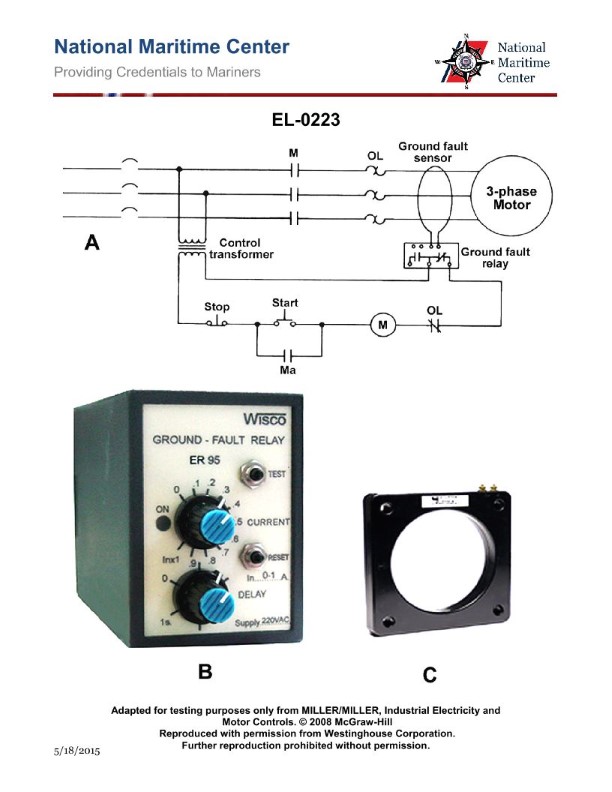
The correct answer is B. Setting the leakage current for too low a value may increase the likelihood of nuisance trips, as the relay will be more sensitive and more likely to detect minor leakage or normal electrical noise as a fault. Conversely, setting the leakage current for too high a value may result in incidental damage due to a ground fault, as the relay will not trip quickly enough to protect the system. The optimal setting is a balance between sensitivity and robustness to avoid both nuisance trips and potential damage. The other answer choices are incorrect because: A) Reverses the impact of high vs low leakage current settings. C) Correctly identifies the issue with improper settings, but does not specify the directionality. D) Correctly identifies the issue with improper settings, but does not specify the directionality.
Ready to test your knowledge?
Take a Electricity & Electronics - Assistant Engineer Practice ExamPass Your Coast Guard Licensing Exams!
Study offline, track your progress, and simulate real exams with the Coast Guard Exams app