Question 15 OSE02 - Assistant Engineer - OSV
The various auxiliary diesel engines fitted on your anchor handling vessel may employ a variety of different cranking methods for engine starting. What type of cranking method is shown in the illustration? Illustration MO-0044
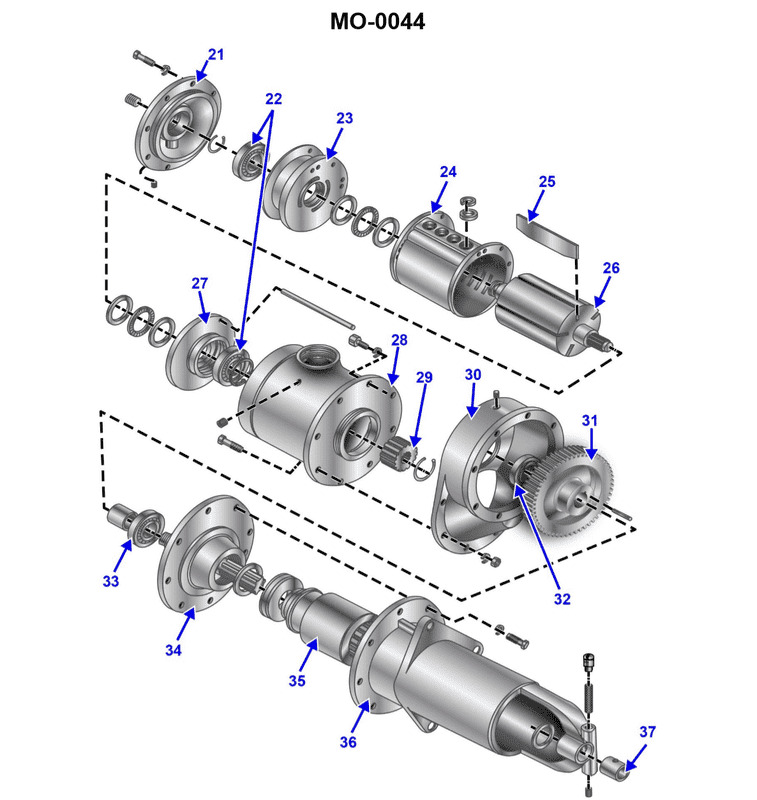
The Correct Answer is B **Why Option B ("Air cranking motor") is correct:** Auxiliary diesel engines (and often main engines) on large vessels like anchor handling vessels commonly use compressed air for starting. An air cranking motor (or air starter) uses high-pressure air (typically stored in air receivers) directed through a turbine or vane-type motor. This motor drives a pinion gear which engages the engine's flywheel, spinning the engine fast enough to reach firing speed. The illustration MO-0044 is designed to depict the distinct components and operational layout of a typical pneumatic starting system, characterized by the large starter motor housing often seen directly mounted to the engine block or flywheel housing, connected to the ship's compressed air supply. **Why the other options are incorrect:** * **A) Electric cranking motor:** While electric starters are standard on smaller marine auxiliary engines and generators, they are less common for very large auxiliary engines due to the massive current draw and the size/weight of the required batteries and motor. The components shown in a typical depiction of an air starter (large housing, air pipe connections) do not match the compact design of a high-power electric starter and battery setup. * **C) Gasoline engine cranking motor:** This method is obsolete and generally not used on any modern commercial marine vessel, especially not on the large, high-output auxiliary diesels found on an anchor handling vessel. * **D) Hydraulic cranking motor:** Hydraulic starters are powerful and reliable, sometimes used in specialized marine applications or for engines where sparks are a severe hazard (like in certain oil rigs). However, the general installation and operational principles illustrated in typical marine engineering diagrams (like MO-0044) usually prioritize the widely utilized and robust air starting system over the less common hydraulic system, which would require dedicated high-pressure hydraulic pumps and reservoirs instead of the general-purpose compressed air system already available onboard.
Pass Your Coast Guard Licensing Exams!
Study offline, track your progress, and simulate real exams with the Coast Guard Exams app