Question 36 DDE01 - Designated Duty Engineer - Unlimited HP
The rated speed of the main propulsion diesel engines on your towing vessel is 900 rpm. The installed centrifugal over speed trip device similar to the one shown in the illustration is designed to shut down the engine at 110% of rated speed. Upon testing the over speed trip device, you determine that the actual shutdown occurs at 945 rpm. Which of the following would account for this? Illustration MO-0101
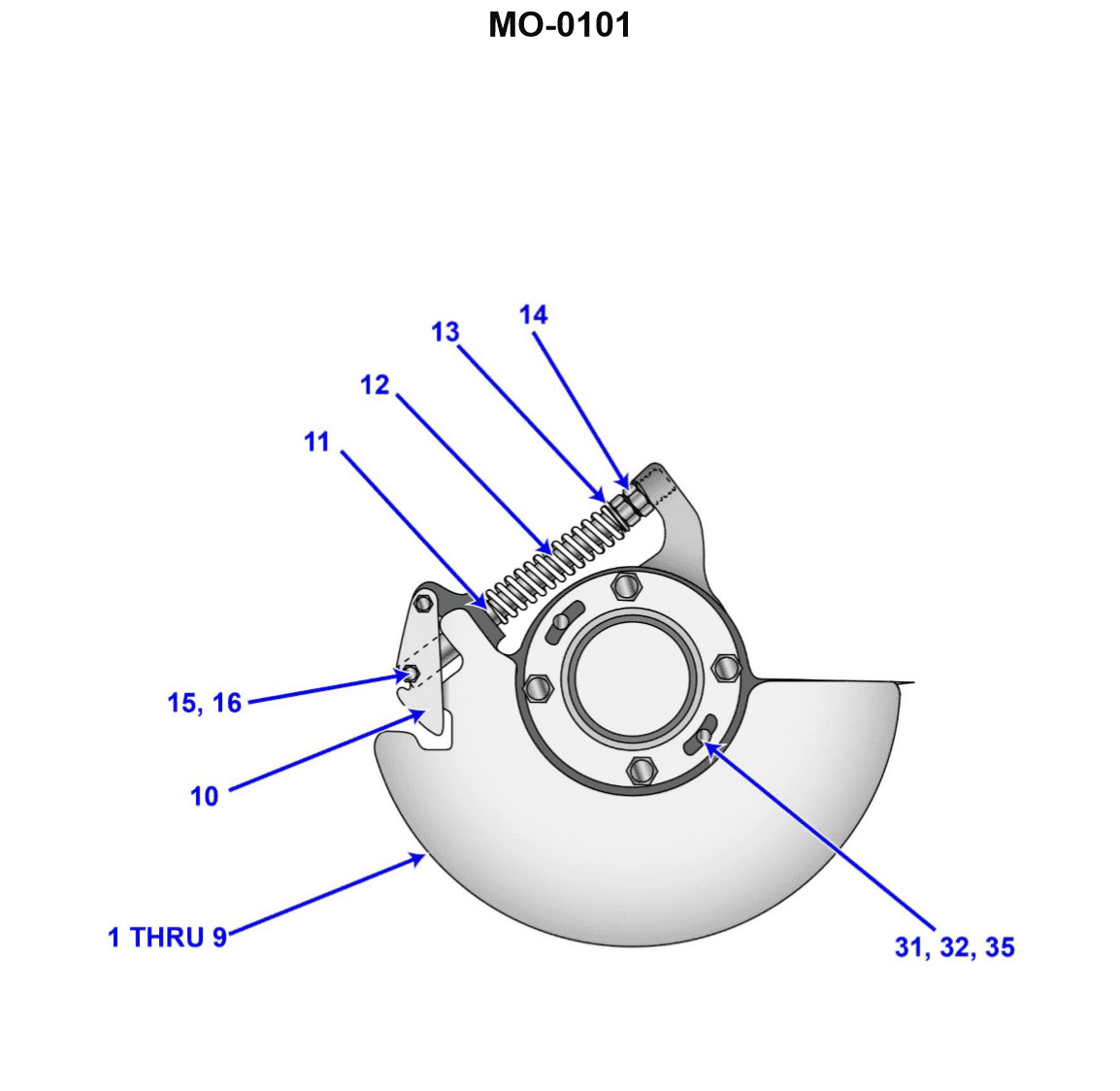
The Correct Answer is D ### Explanation of Correct Option (D) **D) The jam nut was not properly tightened against the adjusting nut (items 13) when the over speed trip was last set.** The overspeed trip device relies on a balance between centrifugal force (generated by the throw-out weights, item 10) and a counteracting spring force (provided by the compression spring, item 12). The adjusting nut (item 13) sets the tension/compression of the spring, thereby determining the speed required to overcome the spring and activate the trip mechanism (designed to be 990 rpm). The engine is currently tripping prematurely, meaning it is shutting down at 945 rpm—a speed lower than the intended 990 rpm. This indicates that the required spring force has been reduced. If the jam nut failed to secure the adjusting nut after the trip was last set, engine vibration and operational stress could cause the adjusting nut (item 13) to back off and loosen. When the adjusting nut loosens, the compression on the spring (item 12) is reduced, lowering the resistance the centrifugal weights must overcome. A lower spring force causes the mechanism to trip at a lower engine speed (945 rpm), accounting for the premature shutdown. --- ### Explanation of Incorrect Options **A) The throw-out weight (item 10) pivot bolt (not labelled) is binding within the counterweight (item 1 through 9) drilling.** Binding introduces friction. Increased friction resists the outward movement of the throw-out weights. If the weights resist movement, they would require *more* centrifugal force (a *higher* engine speed than 990 rpm) to trip the engine. Therefore, binding cannot account for a premature shutdown at 945 rpm. **B) The compression spring (item 12) was excessively compressed when the over speed trip was last set.** Excessive compression means the spring force is too high. If the spring force is high, the centrifugal weights would require significantly *more* speed (greater than 990 rpm) to overcome the resistance and trip the engine. This would result in a delayed shutdown, not a premature one. **C) The throw-out weight (item 10) link bolt (item 15 and 16) is binding within the spring guide (item 14) drilling.** Similar to Option A, binding introduces friction and resists the travel of the weights toward the tripping position. This resistance would cause the trip mechanism to require a *higher* engine speed (delayed shutdown) rather than the observed premature shutdown.
Pass Your Coast Guard Licensing Exams!
Study offline, track your progress, and simulate real exams with the Coast Guard Exams app