Question 45 3AE01 - Third Assistant Engineer
The device shown in the illustration is a __________. Illustration MO-0008
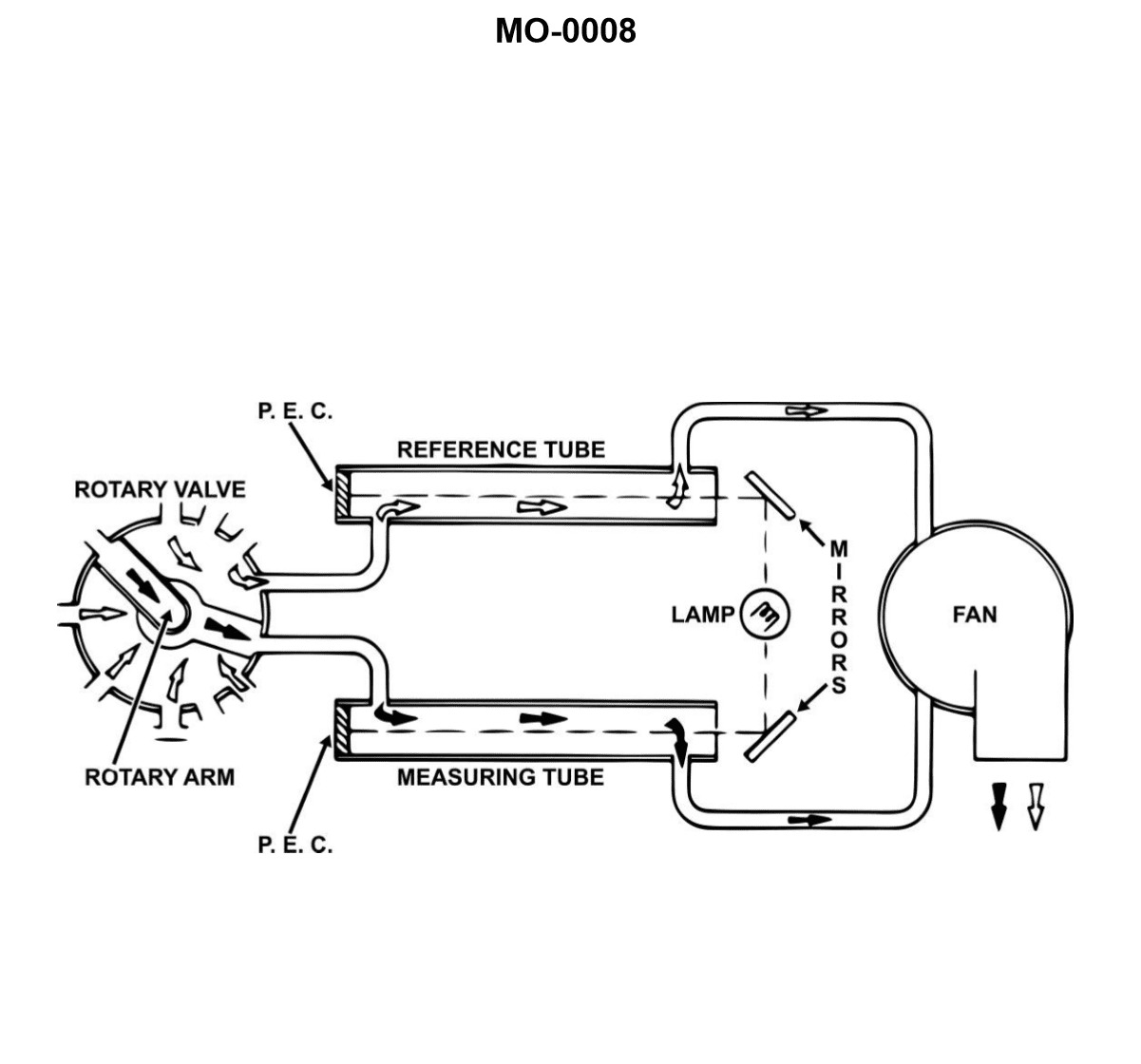
The Correct Answer is C **Explanation for C being correct:** The device described as a "comparator type mist detector" is consistent with systems like the Graviner or Schaller Oil Mist Detector. These devices operate by continuously drawing samples of the atmosphere from various locations within the crankcase of a diesel engine. They compare the density of the sample atmosphere against clean reference air (or against another sample zone) using optical principles (often light scattering or opacity). A sudden increase in oil mist concentration indicates a localized hot spot (like an overheating bearing or piston skirt), which can lead to a crankcase explosion. This type of sophisticated, reliable monitoring equipment is mandatory and universally used for the safety monitoring of **large low-speed, crosshead type marine diesel engines** due to the sheer size of the crankcase and the catastrophic potential of a crankcase explosion. **Why the other options are incorrect:** * **A) rotary type mist detector, designed for use in four-stroke, high-speed diesel engines:** While rotary mist detectors (like older Graviner Mark 3 units) exist, they are less common than the comparator/sampling types described in modern usage, especially for the very large engines where this equipment is critical. Furthermore, while they can be used on four-stroke engines, their primary and most critical application is on the largest engines which are typically low-speed crosshead types. * **B) photoelectric, explosive gas indicator, for use in high-speed, two-stroke, trunk type piston engines:** This is inaccurate. The device is specifically an **oil mist detector**, not a general explosive gas indicator (explosimeter). While oil mist is combustible, the detector is designed to detect the *precursor* (the mist formed by vaporization) rather than the fully explosive gas mixture. Also, it is most essential on low-speed crosshead engines, not typically high-speed trunk piston engines. * **D) level type explosimeter, for small medium-speed, trunk type piston engines:** This is incorrect. An explosimeter measures the concentration of flammable gas relative to the Lower Explosive Limit (LEL). The device in question is designed specifically to detect oil mist concentration, which requires a specialized detector employing optical measurement, not a generic LEL measurement device. Furthermore, it is designed for large engines, not small ones.
Pass Your Coast Guard Licensing Exams!
Study offline, track your progress, and simulate real exams with the Coast Guard Exams app