Safety & Environmental - QMED
8 images
Question 3
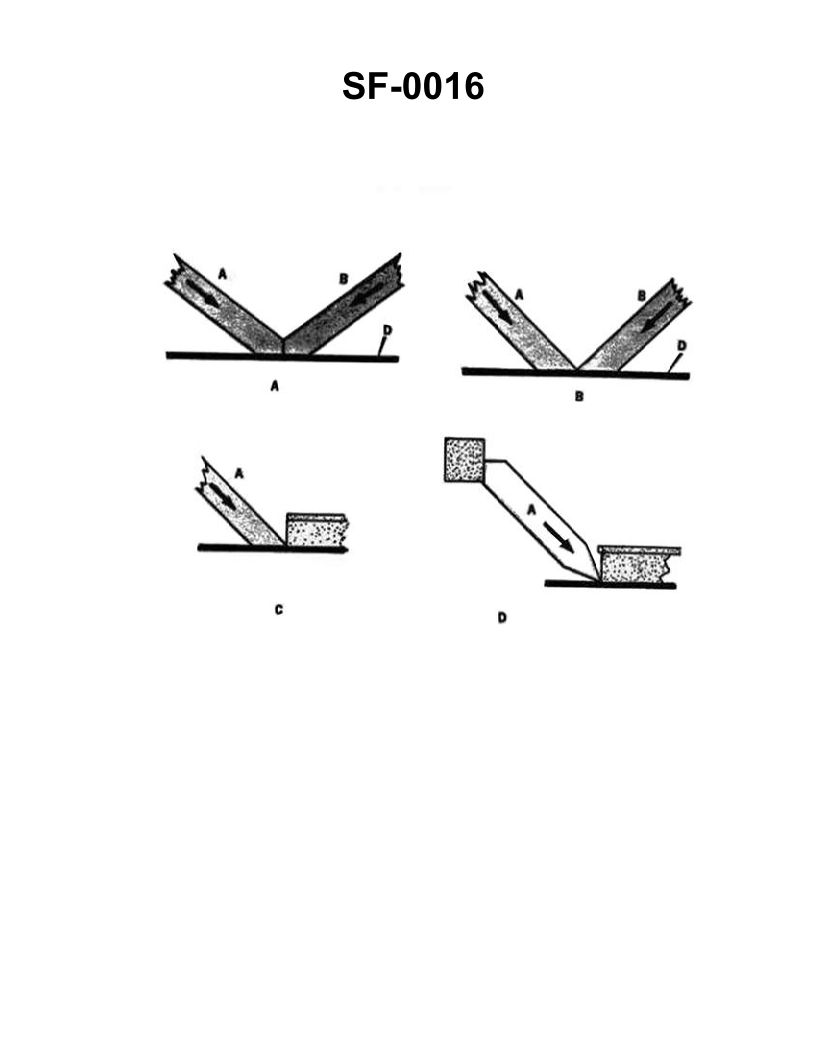
Question: Which of the methods shown in the illustration is the correct way to fit shoring? Illustration SF-0016
A. A
B. B
C. C
D. D
The correct answer is A. The illustration SF-0016 shows different methods of fitting shoring, and option A depicts the correct way to do so. The key principle in fitting shoring is to ensure that the load is evenly distributed across the entire surface, avoiding any gaps or uneven pressure. Option A demonstrates this by having the shoring fit snugly against both the overhead and the deck, creating a stable and secure support structure. The other options (B, C, and D) show less optimal arrangements, where the shoring may not make full contact with one or both surfaces, leading to potential instability or uneven load distribution. Therefore, option A represents the proper, regulated method for fitting shoring based on the principles of load distribution and structural integrity.
Question 31
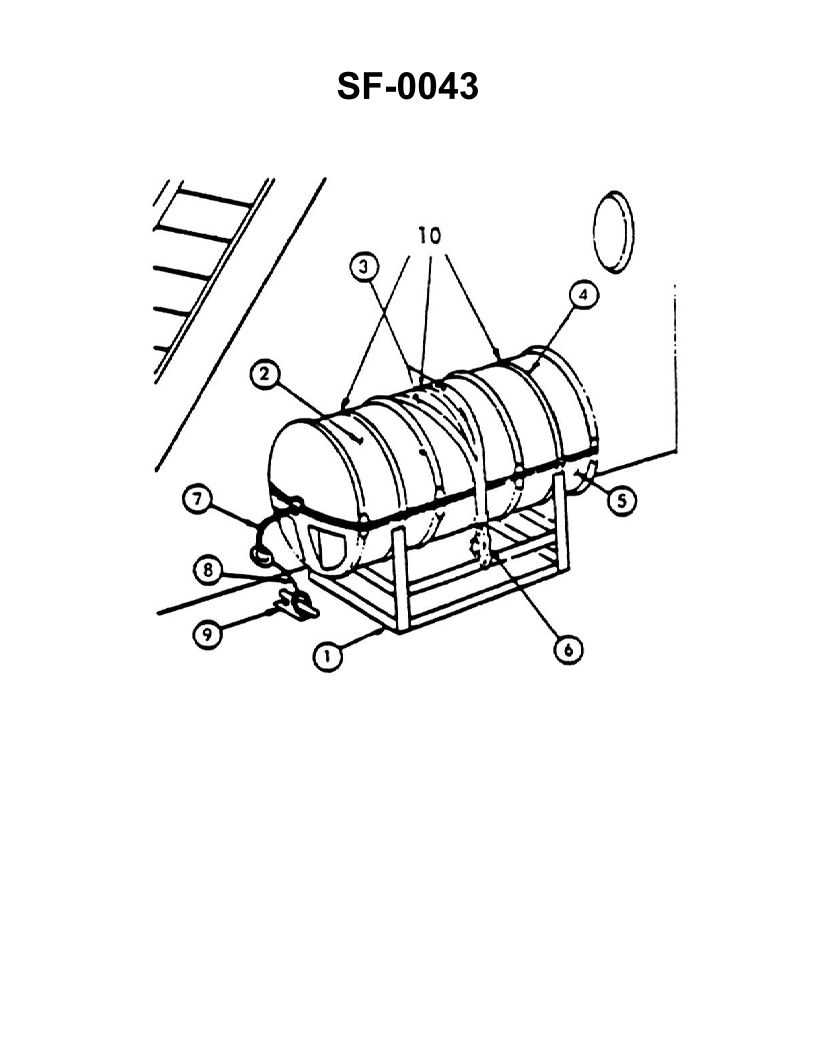
Question: In the illustration shown, the sea painter is identified as item number _______________. Illustration SF-0043
A. 3
B. 6
C. 7
D. 9
The correct answer is C) 7. In the illustration SF-0043, the sea painter is identified as item number 7. The sea painter is a line used to secure a small boat to a larger vessel, and this is a key piece of equipment that is commonly tested on US Coast Guard Captain's License Examinations. The illustration is designed to test the candidate's knowledge of nautical terminology and vessel components, and correctly identifying the sea painter as item 7 demonstrates an understanding of this critical piece of equipment. The other answer choices are incorrect because they do not accurately correspond to the item labeled as the sea painter in the illustration. A, B, and D refer to other components of the vessel shown, but not the sea painter specifically.
Question 73
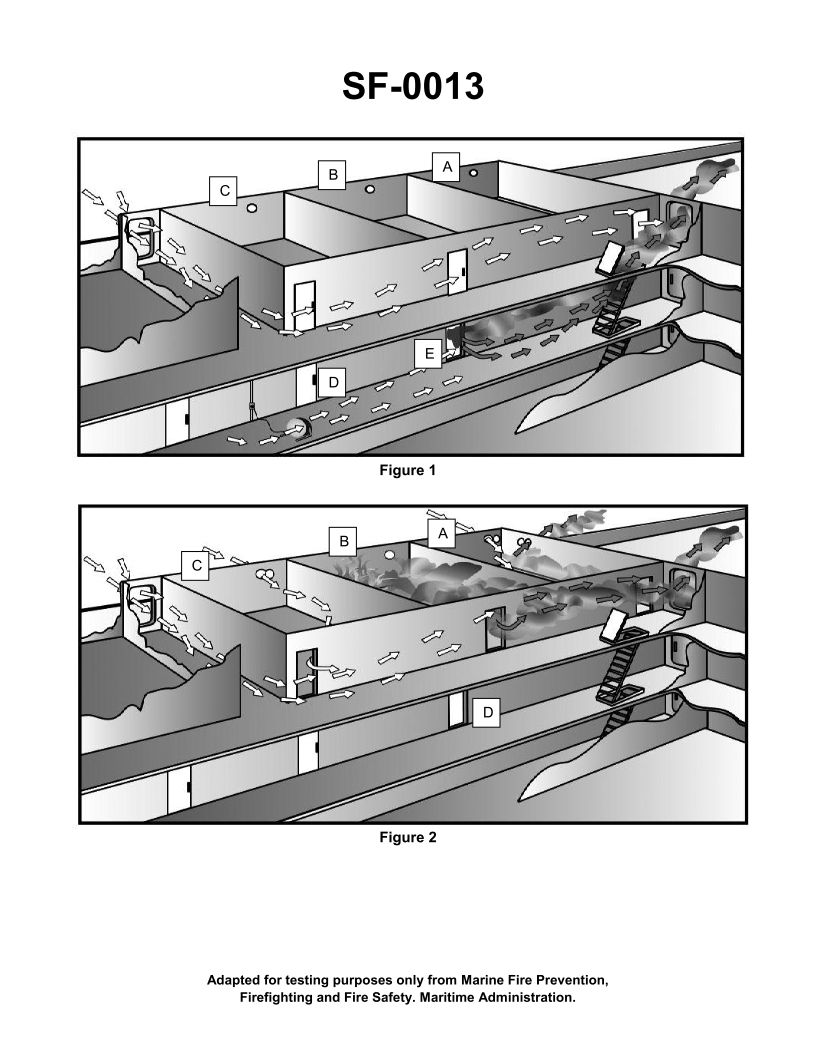
Question: In figure 1 of the illustration, fire would spread to compartment "B" by _______________. Illustration SF-0013
A. radiation
B. impingement
C. convection
D. conduction
The correct answer is D) conduction. In figure 1 of the illustration SF-0013, fire would spread to compartment "B" by conduction. Conduction is the transfer of heat through a solid material, such as the bulkhead or wall separating the two compartments. Heat from the fire in one compartment would be conducted through the solid material, eventually raising the temperature of the adjacent compartment and causing the fire to spread. The other answer choices are incorrect because radiation involves the transfer of heat through electromagnetic waves, impingement refers to the direct impact of hot gases or flames, and convection is the transfer of heat through the movement of fluids or gases. In this case, conduction is the primary mechanism by which the fire would spread to the adjacent compartment.
Question 164
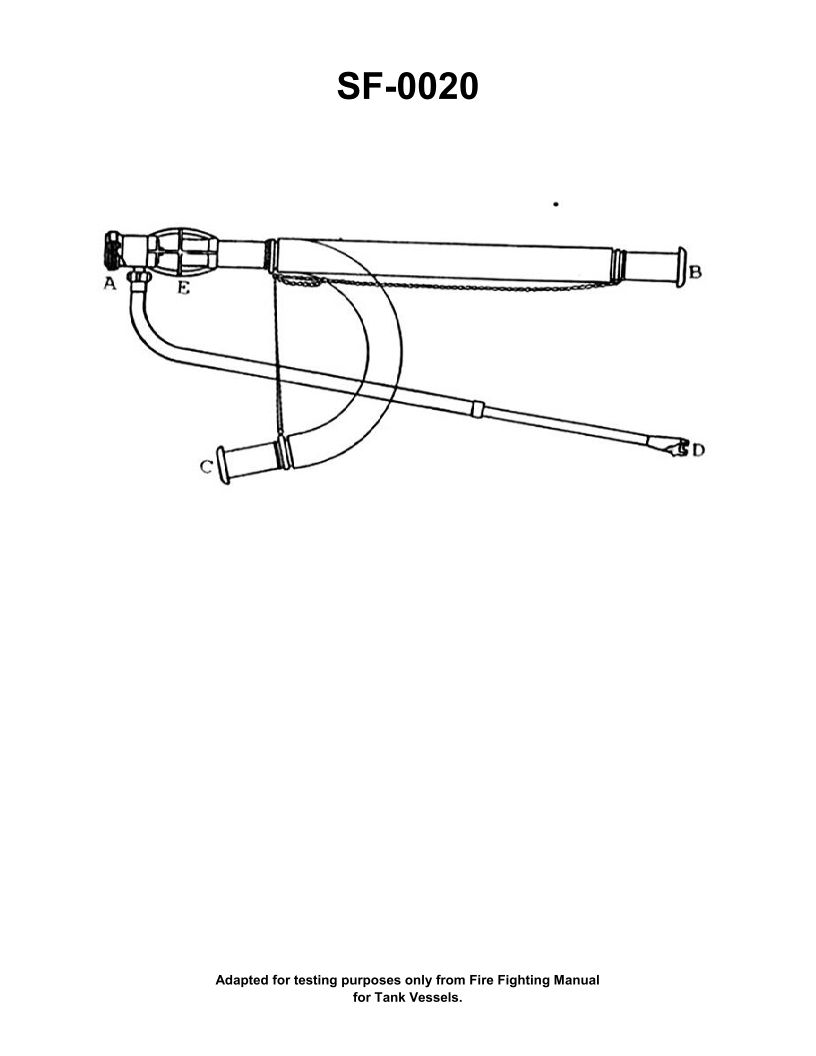
Question: The fire extinguishing agent dispensed by the unit shown in the illustration is produced by _______________. Illustration SF-0020
A. educating air through "D" and mixing it with water in chamber "E"
B. educting mechanical foam through "D" and mixing it with water and air in chamber "E"
C. educting chemical foam through "D" and mixing it with water in chamber "E"
D. educting air through "C", mechanical foam through "D", and mixing them with water in chamber "E"
The correct answer is B) educting mechanical foam through "D" and mixing it with water and air in chamber "E". This is the correct answer because the illustration SF-0020 depicts a fire extinguishing unit that uses a mechanical foam agent. Mechanical foam is created by mixing water, air, and a foam concentrate, which is then discharged through the nozzle. The key element in this process is the "D" port, which would be responsible for educting (drawing in) the mechanical foam concentrate and mixing it with water and air in the "E" chamber before being discharged. The other answer choices are incorrect because they do not accurately describe the mechanism of a mechanical foam fire extinguishing system as shown in the illustration.
Question 183
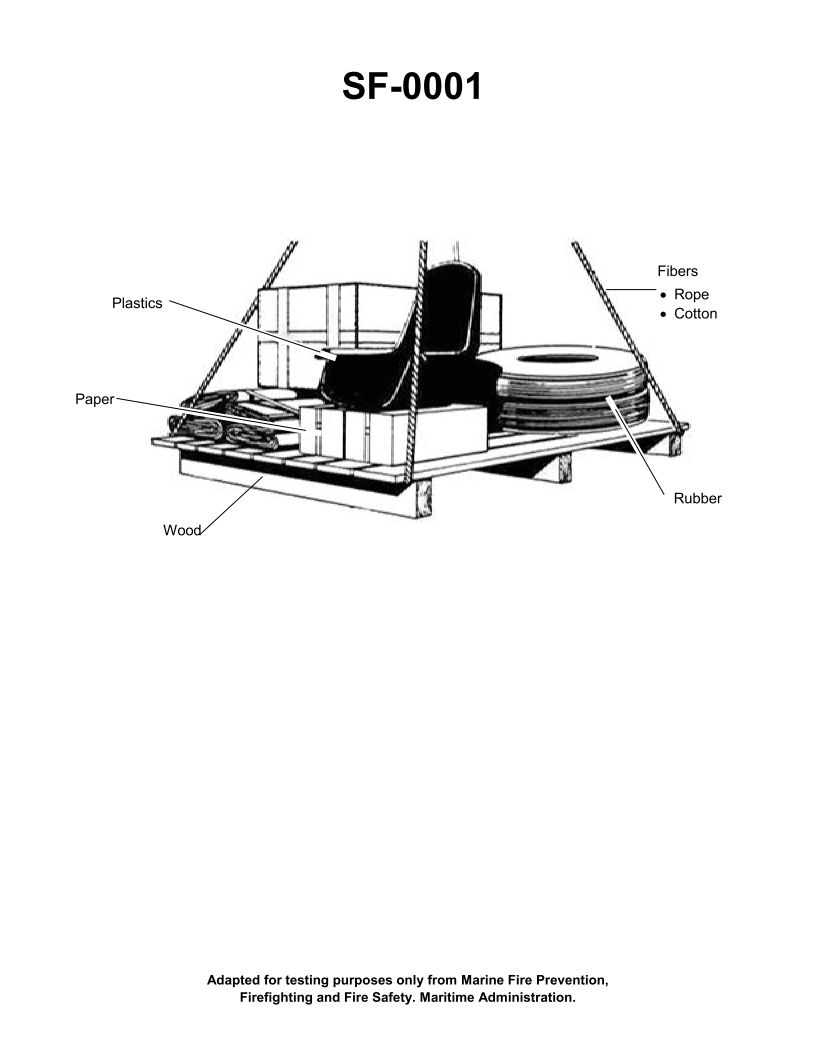
Question: If the items shown in the illustration are burning, this fire would be a Class _______________. Illustration SF-0001
A. "A"
B. "B"
C. "C"
D. "D"
The correct answer is A) "A". The illustration SF-0001 indicates that the items shown are burning, which suggests a fire involving ordinary combustible materials like paper, wood, cloth, etc. This type of fire is classified as a Class A fire according to the fire classification system used for the US Coast Guard Captain's License Examinations. Class A fires involve ordinary combustible materials, and they are typically extinguished using water or other agents that can cool the burning materials and smother the flames. The other answer choices are incorrect because Class B fires involve flammable liquids or gases, Class C fires involve energized electrical equipment, and Class D fires involve combustible metals, none of which are indicated in the provided illustration.
Question 186
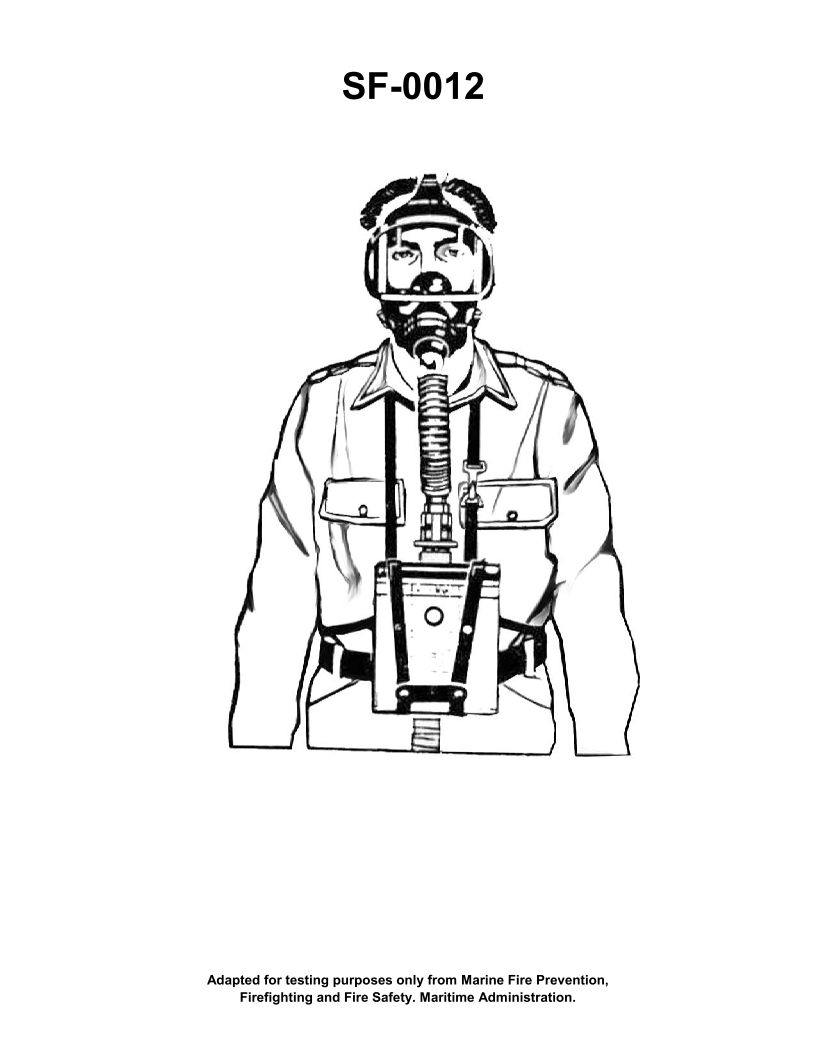
Question: The equipment shown in the illustration is a _______________. Illustration SF-0012
A. canister-type gas mask
B. fresh-air hose mask
C. demand-type breathing apparatus
D. cylinder-type air mask
The correct answer is A) canister-type gas mask. This is the correct answer because the illustration SF-0012 depicts a canister-type gas mask, which is a type of respiratory protective equipment used to filter out harmful gases, vapors, or particulates from the air. Canister-type gas masks are approved for use by the US Coast Guard and are a required piece of safety equipment for certain operations and environments. The other answer choices are incorrect because they describe different types of breathing apparatus that are not shown in the illustration. Fresh-air hose masks, demand-type breathing apparatus, and cylinder-type air masks have different design and functionality compared to the canister-type gas mask depicted in the illustration.
Question 202
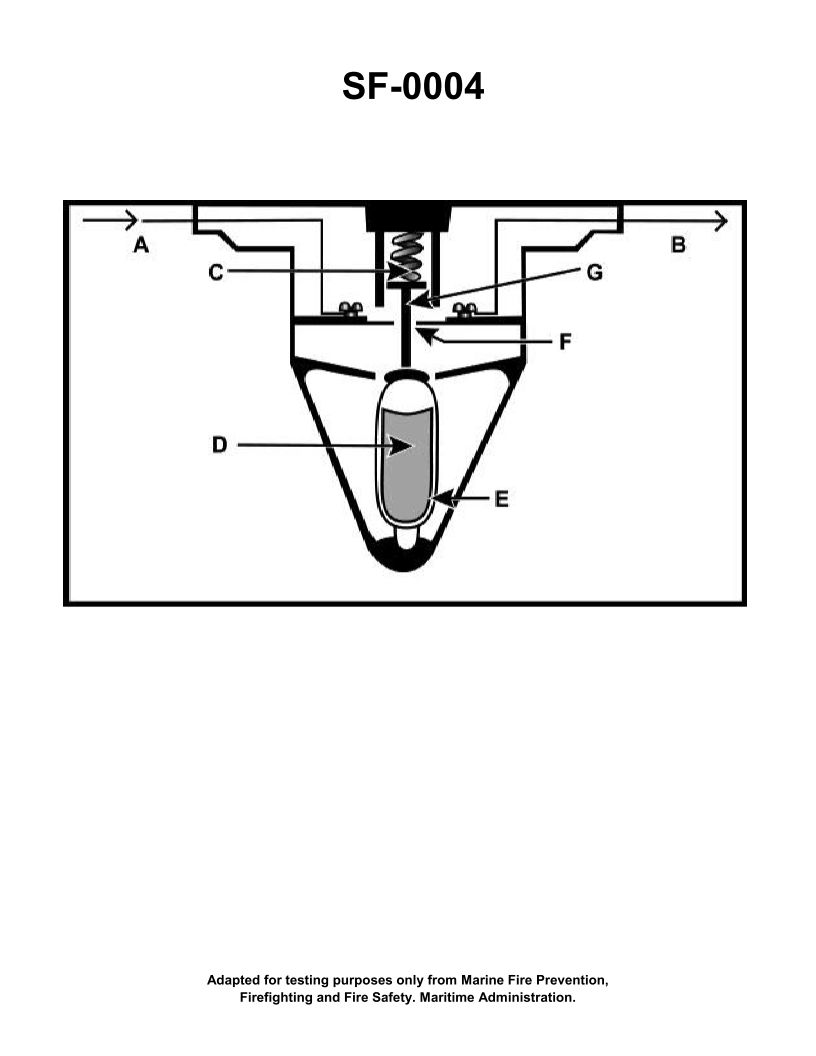
Question: The component shown in the illustration would be installed in which of the following types of fire detection systems? Illustration SF-0004
A. Fixed temperature
B. Line-type pneumatic
C. Combined fixed temperature and rate-of-rise
D. Rate-of-rise
The correct answer is A) Fixed temperature. The component shown in the illustration SF-0004 is a fixed temperature fire detector. Fixed temperature detectors are designed to activate when the surrounding temperature reaches a predetermined set point, typically between 135°F and 250°F. This type of detector is commonly used in fire detection systems where a rise in temperature is the primary indicator of a fire, such as in machinery spaces or other areas where a steady temperature is expected. The other options are incorrect because line-type pneumatic, combined fixed temperature and rate-of-rise, and rate-of-rise detectors operate on different principles and are not compatible with the component shown in the illustration.
Question 245
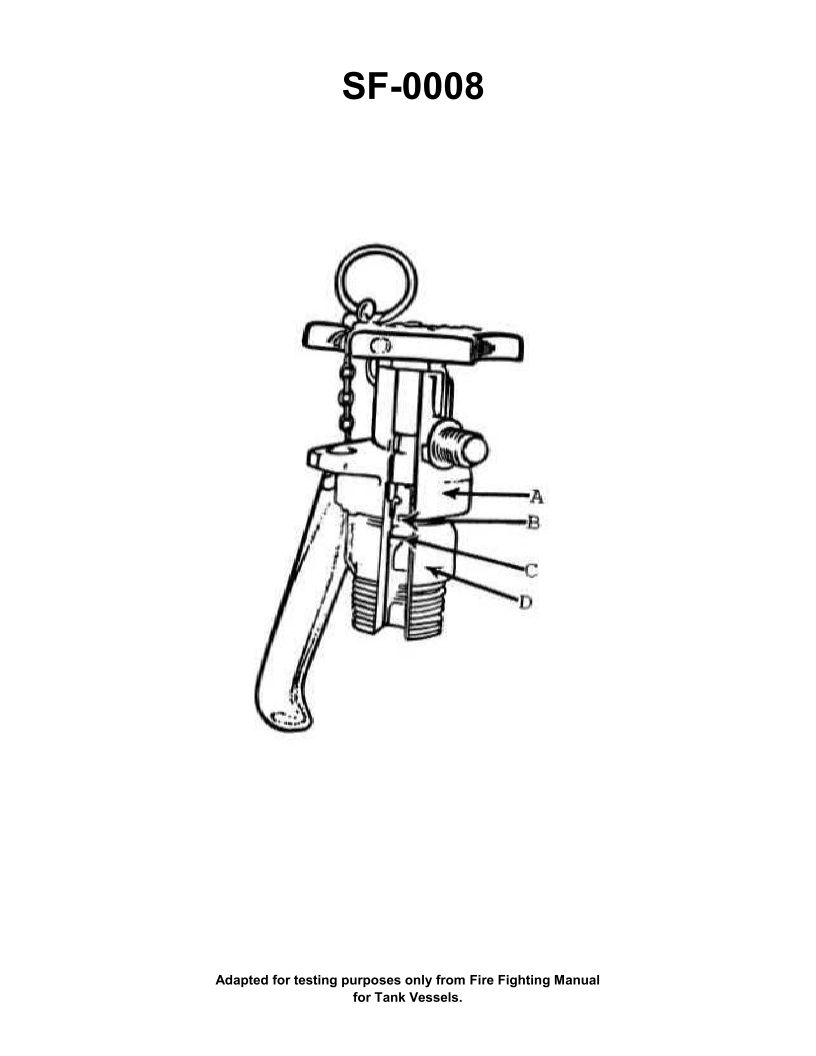
Question: To operate a carbon dioxide extinguisher having the type of head shown in the illustration, you would _______________. Illustration SF-0008
A. pull pin, open valve, and pull up on release lever
B. pull pin and open valve
C. open valve, pull pin, and pull up on release lever
D. open valve and pull pin
The correct answer is B) pull pin and open valve. The reason this is the correct answer is that this type of carbon dioxide (CO2) fire extinguisher is designed to be operated by first pulling the pin, which releases the safety mechanism, and then opening the valve to discharge the CO2 agent. This is the standard procedure for operating a CO2 extinguisher with this type of head design, as specified in fire safety regulations and training. The other answer choices are incorrect because they either include additional unnecessary steps (A and C) or omit the critical step of pulling the pin (D), which is required to release the safety mechanism and allow the extinguisher to discharge properly.
Want to practice with timed exams?
Download Coast Guard Exams for the full exam experience with timed tests and progress tracking.
Get the App